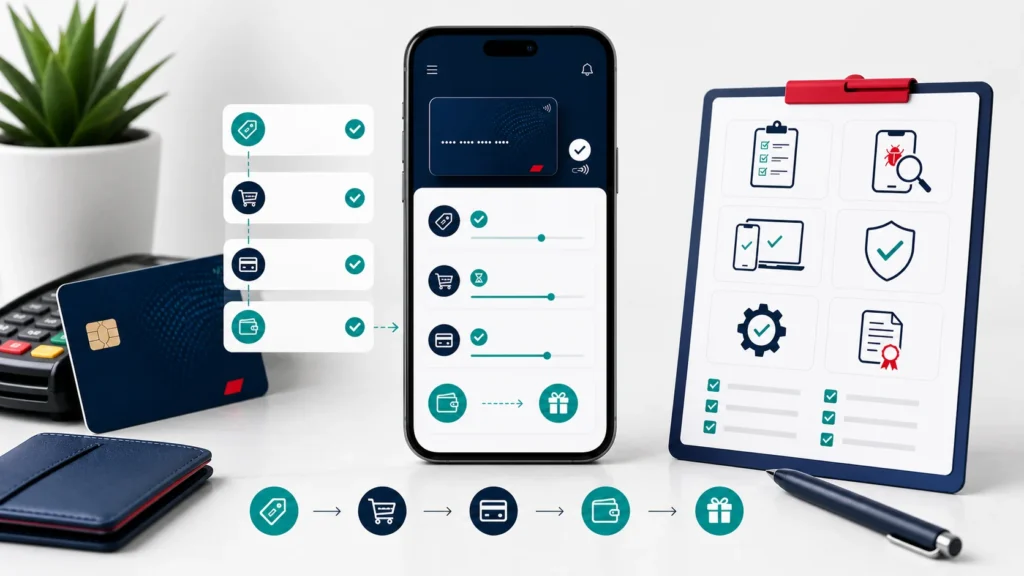
Cashback and loyalty products look simple to the customer: activate an offer, make a purchase and receive a reward. Behind that journey are eligibility rules, linked-card states, transaction updates, reward calculations, ledger entries, notifications, admin configuration and reconciliation. A defect in any one of those layers can create a missing reward, duplicate balance or support case that is difficult to reproduce.
Planning a cashback or loyalty release?
Share the product roles, transaction source, reward rules, integrations, target devices and release date. We will recommend a practical FinTech QA scope and quote.
Why cashback app testing is different from ordinary mobile QA
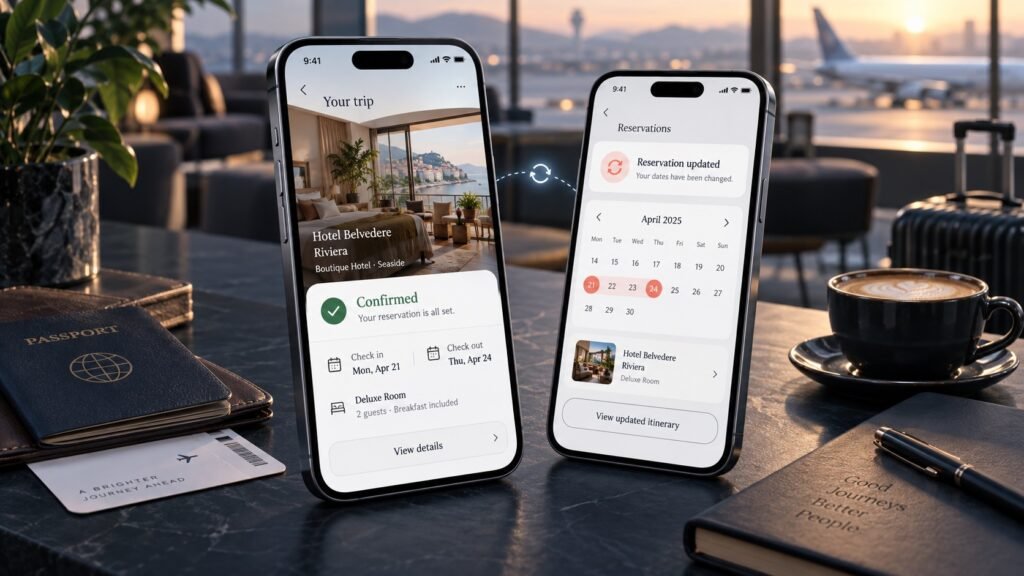
The customer-visible screen is only one representation of the reward. A purchase may first arrive as pending, change amount when it posts, disappear, be replaced by another transaction identifier or be refunded later. Meanwhile, the reward engine applies merchant, geography, channel, date, plan, threshold, cap and exclusion rules. Testing needs to preserve those relationships.
Map the full card-linked reward lifecycle
Discovery, segmentation, merchant rules, timing, exclusions and activation.
Consent, tokenized linking, replacement cards, relinking and account changes.
Pending, posted, changed, removed, delayed, duplicated and out-of-order events.
Calculation, ledger entry, wallet balance, notification, refund and reversal.
Card-linked offer platforms expose constructs such as offers, redemption and linked-card workflows. Transaction providers also document that pending transactions can later be replaced, removed or updated. Those system behaviors are why a final-state screenshot is not enough evidence for this type of QA.
Cashback calculation and eligibility test matrix
| Rule area | Boundary examples | Evidence |
|---|---|---|
| Reward type | Fixed, percentage, threshold, cap and tiered reward | Input amount, rule version and calculated amount |
| Eligibility | Merchant, category, geography, channel, account plan and audience | Matched criteria and exclusion reason |
| Precision | Currency conversion, decimal precision and rounding | Raw and displayed values |
| Campaign overlap | Stacking, priority and first-match rules | All eligible campaigns and selected result |
| Limits | Per transaction, per day, campaign and lifetime caps | Balance before and after the boundary |
Pending, posted and removed transaction QA
A pending purchase should not always be treated as final. Test whether the reward is reserved, delayed or hidden according to the product rule. Then verify the transition when the posted amount or identifier differs. Include removed transactions, delayed posting, partial updates, duplicate webhooks and out-of-order delivery. The expected result should be idempotent: retries must not create an extra reward.
Refunds, reversals and ledger reconciliation
For full and partial refunds, compare the source transaction, reward entry, wallet balance, customer history, admin view and notification. The scope should define whether a reward becomes pending, is reversed immediately or produces a negative adjustment. It should also record how support agents can explain that state to the customer.
Mobile, API and admin coverage
- iOS and Android release builds on agreed real devices.
- Background, resume, offline, reconnect and interrupted authentication states.
- Deep links, push notifications and expired-session recovery.
- API retries, webhooks, duplicate events, idempotency and delayed updates.
- Offer creation, approval, pause, expiry, adjustment and support workflows.
- Keyboard, screen-reader, focus, zoom, contrast and smaller-screen observations.
What should a cashback QA vendor deliver?
Expect an agreed coverage matrix, device and environment list, defect reports with reproduction evidence, traceability to reward rules, retest status and a release summary. The report should distinguish confirmed defects, observations, blocked checks and excluded work. It should not rely on generic prompts or promise regulatory certification that is outside the engagement.
What affects cashback and loyalty app testing cost?
Cost is shaped by the number of user and admin roles, offers, reward formulas, transaction sources, integrations, mobile platforms, browsers, devices, environments, release frequency and retest cycles. A focused pre-launch cycle costs differently from a dedicated tester supporting weekly releases. Review approved QA pricing and mobile testing packages, then request a custom scope for transaction-heavy integrations.
How to choose a cashback app testing company
- Ask how the team traces a visible reward to the transaction and ledger events behind it.
- Request an example of evidence for duplicates, delayed posting and refunds.
- Confirm the allowed sandbox accounts, test cards and data-handling rules.
- Check whether iOS, Android, APIs and admin workflows are covered by one plan.
- Agree retesting, regression, communication and exclusions before execution.
Download the Card-Linked Cashback and Loyalty QA Matrix
Use the editable workbook to map roles, offers, linked cards, transaction states, calculations, eligibility, reconciliation, refunds, APIs, devices, accessibility and sign-off.
Related FinTech and mobile QA resources
For commercial support, review finance and banking app testing services. For broader device, usability and release coverage, see mobile app testing services. Product teams can also use the refreshed mobile FinTech QA checklist.
Cashback and Loyalty App Testing FAQs
What does cashback and loyalty app testing cover?
It covers offer eligibility and activation, linked-card states, pending and posted transactions, reward calculations, caps and thresholds, wallet and ledger updates, refunds, reversals, notifications, admin workflows, APIs and mobile behavior.
How do you test pending and posted card transactions?
We validate the state transition instead of treating the first transaction event as final. The scope can include pending-to-posted matching, changed amounts, removed transactions, delayed updates, duplicate events and the resulting reward-ledger entry.
Can cashback apps be tested without real customer card data?
Yes. Testing should use approved sandbox accounts, tokens and synthetic or de-identified data. The client confirms the allowed environment, test cards, evidence rules and integrations before execution.
Can you test refunds and reward reversals?
Yes. A defined scope can verify full and partial refunds, cancellation, reward reversal, balance updates, notification behavior and reconciliation between the source transaction, reward ledger and customer wallet.
How much does cashback or loyalty app testing cost?
Cost depends on roles, offers, calculation rules, transaction sources, integrations, devices, release frequency and retesting needs. Testers HUB recommends a package or custom quote after reviewing the workflows and evidence required.
Do you test cashback apps on iOS and Android?
Yes. Mobile coverage can include selected iOS and Android devices, interrupted sessions, background and resume behavior, deep links, notifications, smaller screens, accessibility observations and release-build regression.
Sources and methodology
This guide combines Testers HUB’s evidence-led QA method with official transaction-state and card-linked-offer documentation. See Plaid Transactions documentation, Plaid transaction webhooks, Visa Offers Platform and the current Google Play target API guidance.