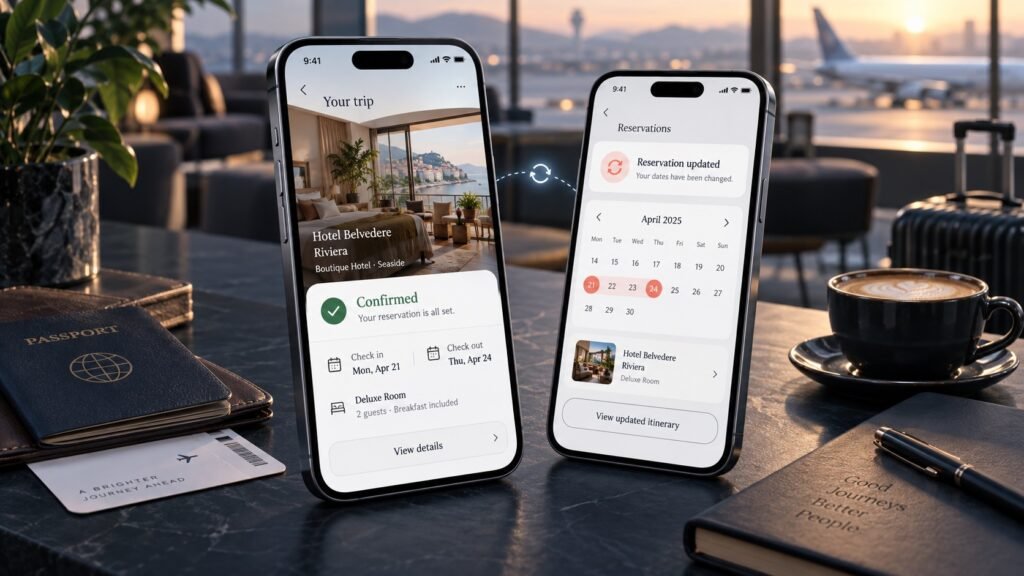
Mobile FinTech products combine identity, money movement, transaction history, rewards, notifications and device-specific behavior. A release can look stable during a short internal check while an interrupted session, delayed event or second device exposes a different state.
Need independent mobile FinTech QA?
Share the critical workflows, sandbox access, target devices and release date. We will recommend a practical scope and quote.
1. Onboarding, identity and KYC journeys
- New, returning, incomplete and rejected applicant states.
- Document upload, image quality, retry, timeout and session recovery.
- Country, age, account-type and eligibility boundaries supplied by the client.
- Clear user feedback when a third-party verification is delayed or unavailable.
2. Authentication, permissions and sessions
Cover sign-in, MFA or OTP, biometric entry, device changes, logout, inactivity, password reset and deep links. Test camera, notification and location permissions across allow, deny, later change and recovery states when the product uses them.
3. Payments and money movement
| Journey | States to include | Evidence |
|---|---|---|
| Transfer or payment | Draft, submitted, pending, completed, failed, cancelled | Reference, timestamps, balances and history |
| Beneficiary | Create, verify, edit, duplicate and invalid details | Input, validation and resulting state |
| Interrupted action | Background, offline, reconnect, timeout and retry | Request identifier and duplicate-prevention result |
4. Transaction history, cashback and rewards
Validate pending-to-posted transitions, amount changes, removed transactions, reward eligibility, thresholds, caps, rounding, wallet entries, refunds and reversals. For deeper coverage, use the cashback and loyalty app testing guide.
5. API, UI and ledger reconciliation
Compare what the customer sees with the source API event, account or reward ledger, admin view and notification. Include delayed responses, retries, duplicate events, out-of-order updates and idempotency.
6. iOS and Android release coverage
- Agreed real devices, OS versions, screen sizes and network conditions.
- Release builds, third-party SDKs, permissions, notifications and deep links.
- Background and resume behavior, offline recovery and app updates.
- Accessibility observations for labels, focus, zoom, contrast and form errors.
7. Defect evidence and regression
Record the build, environment, account state, device, transaction identifiers, expected rule, actual result, timestamps and evidence. After fixes, retest the exact scenario and run risk-based regression around affected authentication, balance, notification and transaction flows.
Capability boundaries
Testers HUB provides functional, exploratory, real-device, integration-workflow and regression QA. We do not present that work as penetration testing, financial certification, legal advice or a formal compliance assessment unless a separately qualified engagement is agreed.
Mobile FinTech QA FAQs
What should a mobile FinTech QA checklist include?
It should cover onboarding and KYC flows, authentication, sessions, payments, transaction states, rewards, refunds, APIs, notifications, iOS and Android devices, interrupted journeys, evidence and release regression.
Can mobile FinTech testing use synthetic data?
Yes. Clients should provide approved sandbox accounts, test cards, tokens and synthetic or de-identified data, together with rules for screenshots, logs and recordings.
How are payment and reward defects reported?
Reports should identify the environment, account state, source transaction, request or event identifiers, expected rule, actual result, timestamps and supporting screen or log evidence.
Does functional QA replace security or regulatory assessment?
No. Functional and exploratory QA supports product quality. It does not replace penetration testing, legal advice, financial certification or a formal compliance assessment.
Should iOS and Android use the same checklist?
The business journeys can share a core checklist, but release builds still need platform-specific device, permission, notification, background, layout and store-readiness checks.
Related services: Finance and banking app testing and mobile app testing services.