Define expected behavior
First, we clarify user intents, acceptable outputs, risky scenarios, and product goals.

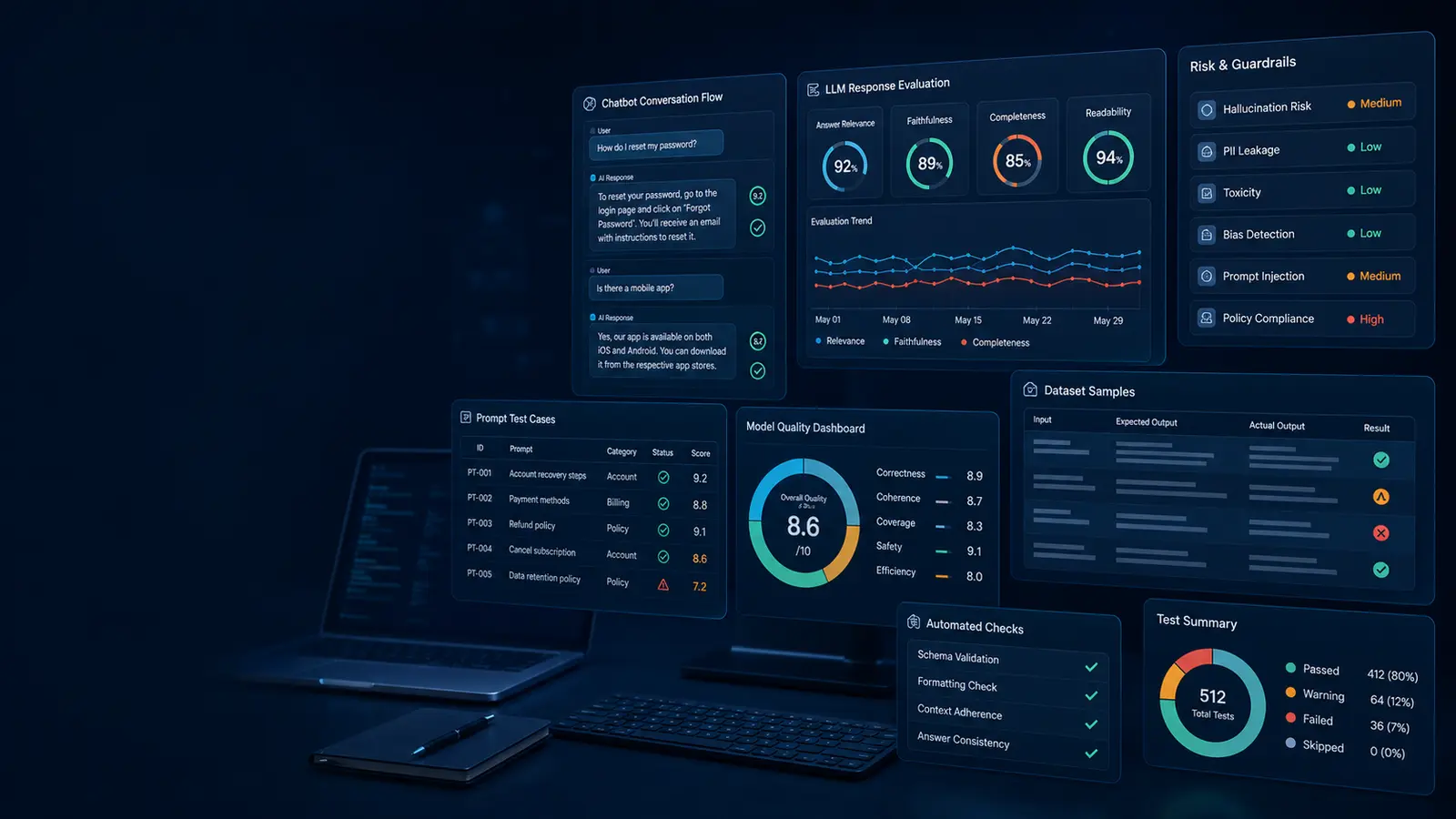
AI testing services for chatbots, LLM workflows, AI-enabled apps, prompt behavior, guardrails, and output quality
Testers HUB helps teams validate AI features beyond a basic happy path. Our AI QA testing services cover chatbot flows, prompt regression, AI output quality, hallucination risks, guardrail checks, integrations, UI behavior, and defect reporting for teams building in the AI era.
What we test
AI quality depends on prompts, data, UI flow, user intent, integrations, and risk controls. Therefore, our AI testing services combine structured scenarios with human judgment so teams can find issues that automated checks may overlook.
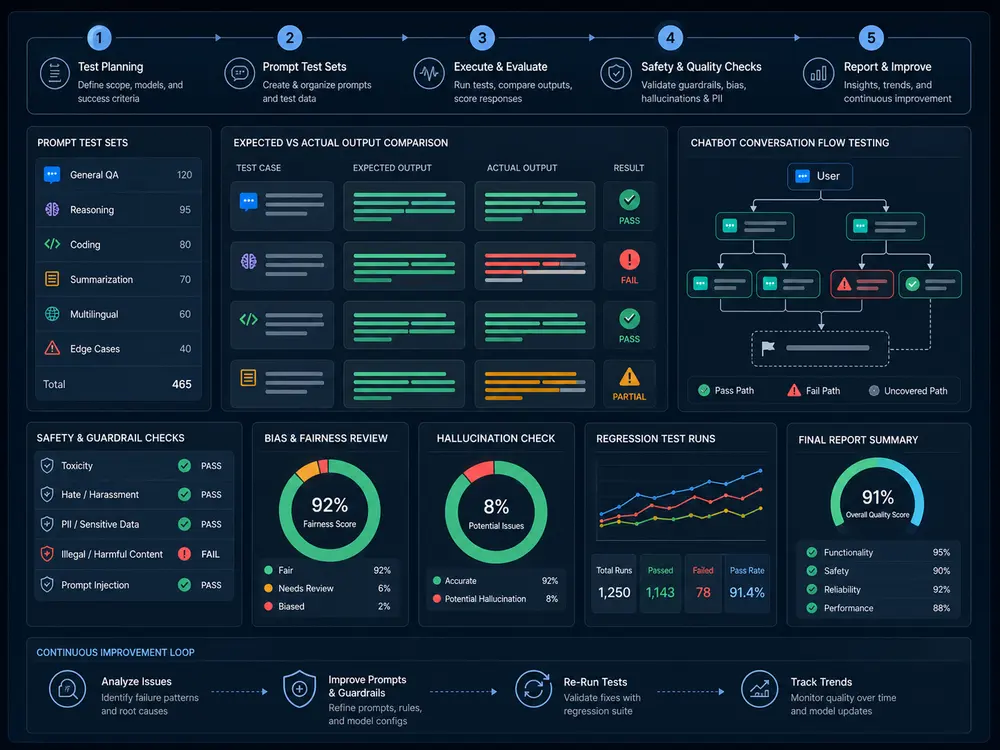
First, we clarify user intents, acceptable outputs, risky scenarios, and product goals.
Next, we test prompts, conversations, UI flows, APIs, fallback behavior, and edge cases.
Finally, findings explain what happened, why it matters, and how teams can retest after fixes.
Review prompt behavior, response relevance, tone, consistency, hallucination risks, and regression across prompt sets.
Validate conversation paths, fallback handling, escalation, memory behavior, UI states, and user-facing responses.
Retest important prompts after model, system prompt, retrieval, data, or product changes.
Check safety rules, refusal behavior, risky requests, policy boundaries, and unwanted output patterns.
Test onboarding, accounts, AI workflows, history, downloads, notifications, billing touchpoints, and integrations.
Use manual QA judgment to assess usefulness, clarity, tone, context, and user experience.
AI-era QA coverage
Generative AI features change quickly, so teams need regression support that can adapt. As a result, we can test LLM workflows, RAG-style experiences, chatbot journeys, AI search, AI assistants, content generation, document review, API behavior, and user-facing quality signals.
Experience based scenario
For a US-based startup launching an AI support assistant, structured QA can uncover unclear answers, weak fallback responses, prompt regressions, broken handoff links, and risky edge cases. After updates, focused retesting helps the team compare behavior against the expected customer experience.
Map user goals, prompt groups, expected behavior, and sensitive scenarios.
Test conversations, UI flows, integrations, and output patterns.
Flag hallucination, tone, safety, fallback, and workflow issues.
Compare fixed behavior against the approved prompt and product expectations.
FAQ
These answers help teams scope AI QA around user trust, output quality, and release risk.
No. Accuracy matters, but AI QA also checks relevance, clarity, tone, safety, fallback behavior, UI flow, integrations, and regression risk.
Yes. Many projects can be tested through the user interface, API, prompt sets, expected outcomes, and agreed test data.
Yes. Human review is useful because chatbot quality often depends on context, tone, helpfulness, and real user expectations.
Yes. Prompt regression helps teams compare important outputs after prompt, model, retrieval, or product changes.