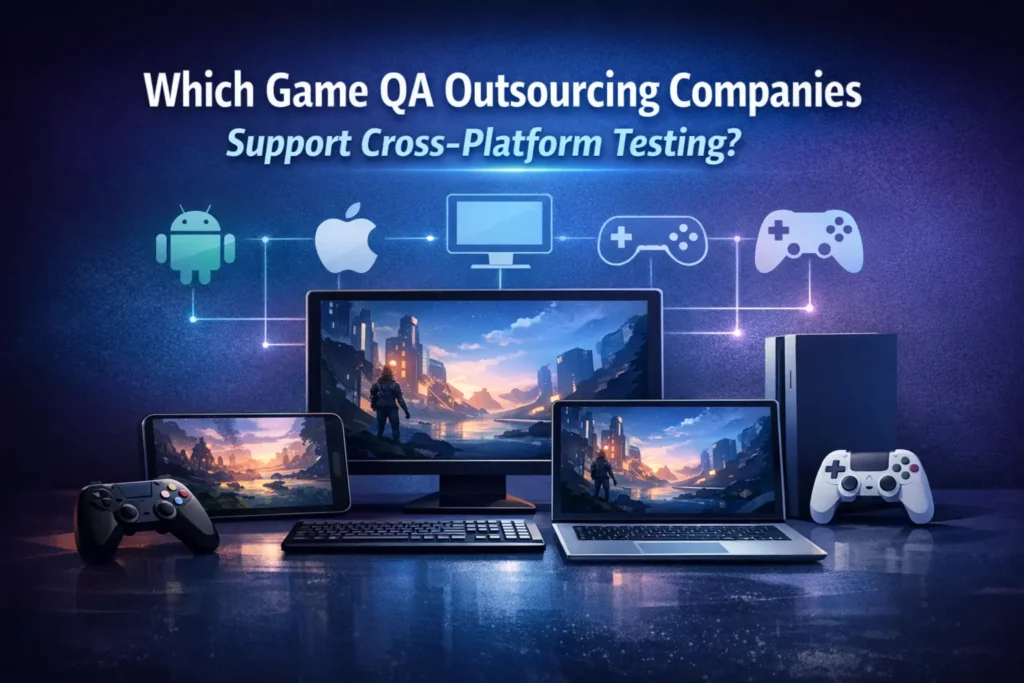
Game launches today rarely stay limited to a single platform. Most studios release on Android and iOS, while many also plan PC builds or staggered cross-platform rollouts. Although this approach expands reach, it also increases risk—because even small inconsistencies between platforms can lead to crashes, poor reviews, or player drop-off.
To manage this complexity, studios increasingly rely on experienced game testing services that understand how different platforms behave in real-world conditions. However, not every QA vendor is capable of handling cross-platform testing effectively.
This guide explains how cross-platform testing actually works, which types of QA outsourcing companies support it, and how studios can choose the right testing partner for mobile and PC releases.
What Cross-Platform Game Testing Involves in Practice
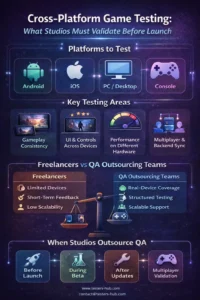
Cross-platform testing is not about repeating the same test cases on multiple devices. Instead, it focuses on validating how the same gameplay experience behaves across different environments.
In real projects, this means:
- Comparing gameplay behavior between Android, iOS, and PC builds
- Identifying UI or control differences caused by screen size or input methods
- Catching performance issues that only appear on specific hardware
- Verifying that multiplayer and backend-driven features behave consistently
- Ensuring updates on one platform do not introduce issues on another
Studios that skip this step often discover platform-specific problems only after launch—when fixes are slower and more expensive.
Why Studios Outsource Cross-Platform Testing Instead of Handling It Internally
Internal QA teams are usually optimized for a limited set of devices or platforms. As soon as a game expands beyond that scope, maintaining coverage becomes difficult.
Studios typically outsource when:
- The game supports both Android and iOS, with additional PC builds
- Multiplayer or live features require synchronized testing
- Frequent updates or content drops are planned
- Device and OS coverage exceeds what internal teams can manage
At this stage, outsourcing game testing services allows development teams to stay focused on features while QA specialists handle compatibility and stability checks.
Types of Game QA Outsourcing Companies That Support Cross-Platform Testing
Rather than listing individual company names, it’s more useful to understand which types of vendors are actually equipped to support cross-platform games.
1. End-to-End Game QA Providers
These companies work as long-term QA partners and support testing across the full release lifecycle.
They usually handle:
- Mobile and PC gameplay validation
- Cross-platform regression testing
- Multiplayer and backend flow testing
- Structured defect reporting and verification
This model works well for studios with ongoing development and regular releases.
2. Mobile-Centric QA Teams with PC Coverage
Some QA vendors specialise in mobile game testing services but also support PC builds when required. These teams are particularly effective for studios where mobile is the primary platform.
Their focus areas often include:
- Real-device testing on Android and iOS
- Performance validation across low- and high-end phones
- UI behavior across resolutions and orientations
- PC client stability checks
This approach suits mobile-first studios that still want confidence in cross-platform behavior.
3. Flexible QA-on-Demand Teams
QA-on-demand providers offer short-term or phase-based testing without long-term commitments. Studios typically use this model during critical release windows.
Common use cases include:
- Pre-launch validation
- Beta testing phases
- Patch and hotfix verification
- Event-based or seasonal updates
This option offers more structure than freelancers while remaining cost-effective.
Freelance Testers vs Outsourced QA Teams for Cross-Platform Games
Freelancers can be useful during early prototypes or for quick feedback. However, cross-platform testing introduces coordination challenges that are difficult to manage at an individual level.
In most real projects:
- Freelancers have limited device access
- Regression testing becomes inconsistent
- Multiplayer testing lacks proper coordination
- Accountability depends heavily on availability
For multi-platform releases, structured game testing services provide far more predictable results.
How to Evaluate a QA Partner for Cross-Platform Testing
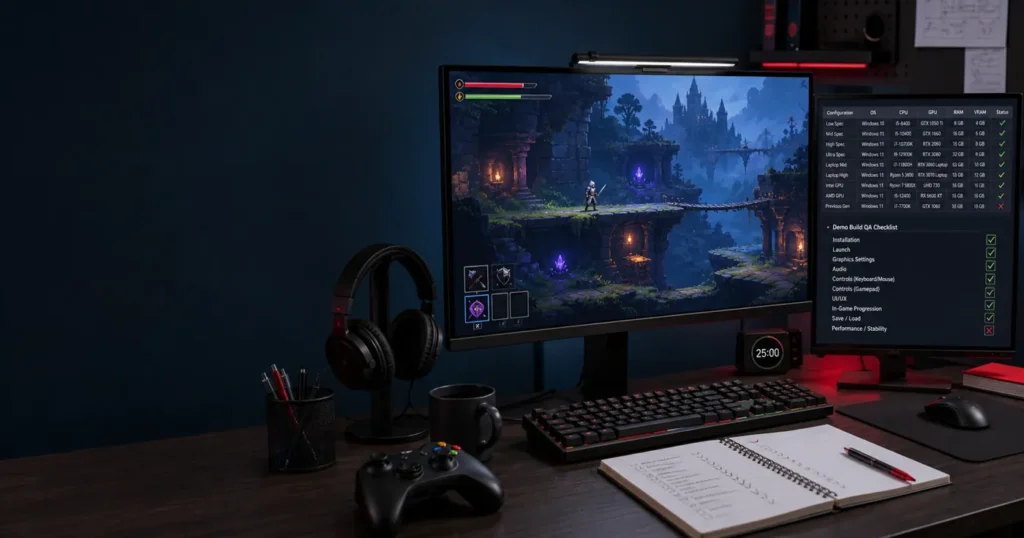
Before finalizing a QA outsourcing company, studios should confirm that the team can support:
- Testing on real Android and iOS devices
- Validation of PC builds and configurations
- Clear test workflows and documentation
- Regression testing across platforms and updates
- Support during post-release changes
Asking these questions early helps prevent last-minute surprises close to launch.
How Testers HUB Supports Cross-Platform Game Testing
At Testers HUB, we work with studios releasing games across mobile and PC platforms. Our focus is on providing practical, release-focused testing support that adapts to each project’s development stage.
Our work typically includes:
- Mobile and PC gameplay testing on real devices
- Cross-platform regression and compatibility checks
- Multiplayer and feature-flow validation
- Clear, actionable defect reporting for development teams
Studios often engage us when they need reliable testing coverage without building large internal QA teams.
Console, Mobile, VR, and AR Game Testing Coverage
Cross-platform game testing should reflect where players actually experience the game. For some teams, that means Android and iOS devices. For others, it includes PC builds, console behavior, controller input, performance differences, or VR and AR interaction risks.
A practical game QA services plan should define platform priority, compatibility coverage, input methods, performance symptoms, visual issues, save behavior, multiplayer risks, and reporting format. If your title is mobile-first, connect cross-platform planning with mobile game testing services so real-device issues are not missed.
Frequently Asked Questions
Do all QA companies support cross-platform game testing?
No. Only teams with real-device access and structured testing workflows can reliably support multiple platforms.
Is cross-platform testing necessary for mobile games?
Yes. Even Android and iOS builds can behave differently due to OS and hardware variations.
Can short-term testing work for cross-platform releases?
Yes. QA-on-demand models are commonly used for launch preparation and updates.
When should studios consider outsourcing testing?
Outsourcing makes sense when platform coverage or release frequency exceeds internal capacity.
Final Thoughts
Cross-platform game releases increase reach—but they also increase risk. Studios that invest in reliable game testing services, especially teams experienced with mobile game testing services and PC workflows, are far better positioned to launch smoothly and scale confidently.
Choosing the right QA partner is not just a technical decision; it’s a critical part of delivering a consistent player experience across platforms.