Your website is live. Pages are loading, forms appear to work, and everything looks fine during internal reviews.
But here’s the reality: many websites that seem perfectly functional still contain issues that affect user experience, lead generation, and conversions every single day.
At Testers HUB, we’ve tested websites across different industries and found that businesses often do not realize there is a problem until users start complaining, leads drop, or sales are affected.
Professional website testing services are not just for large enterprises. They are often the difference between a website that simply exists and one that performs reliably for every visitor.
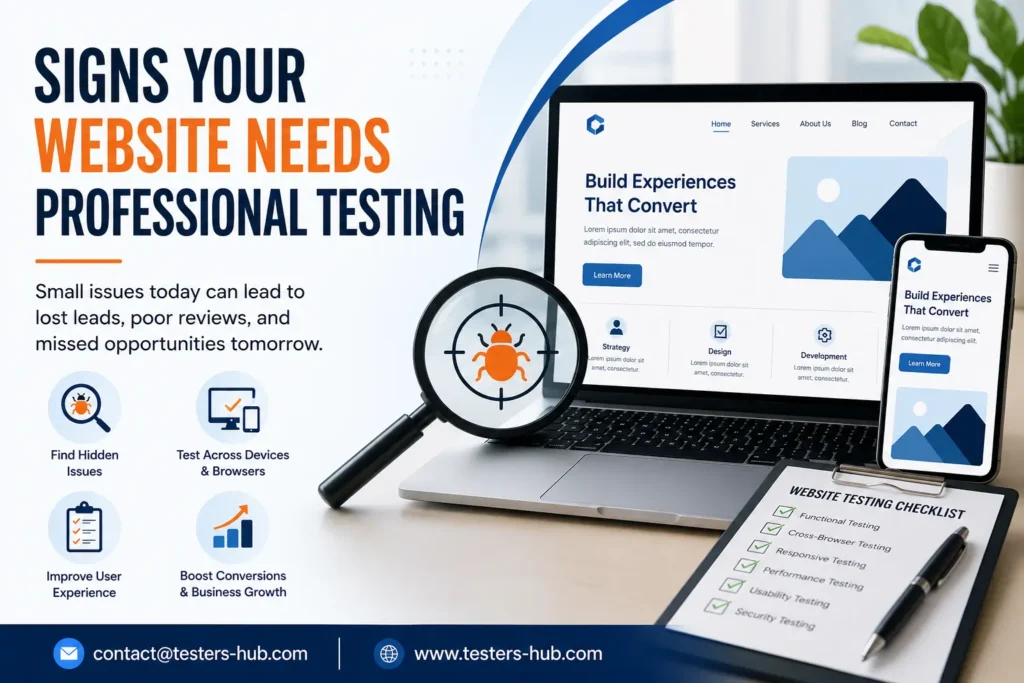
In this article, we will explore the most common signs that your website needs professional testing and why addressing these issues early can save time, money, and lost opportunities.
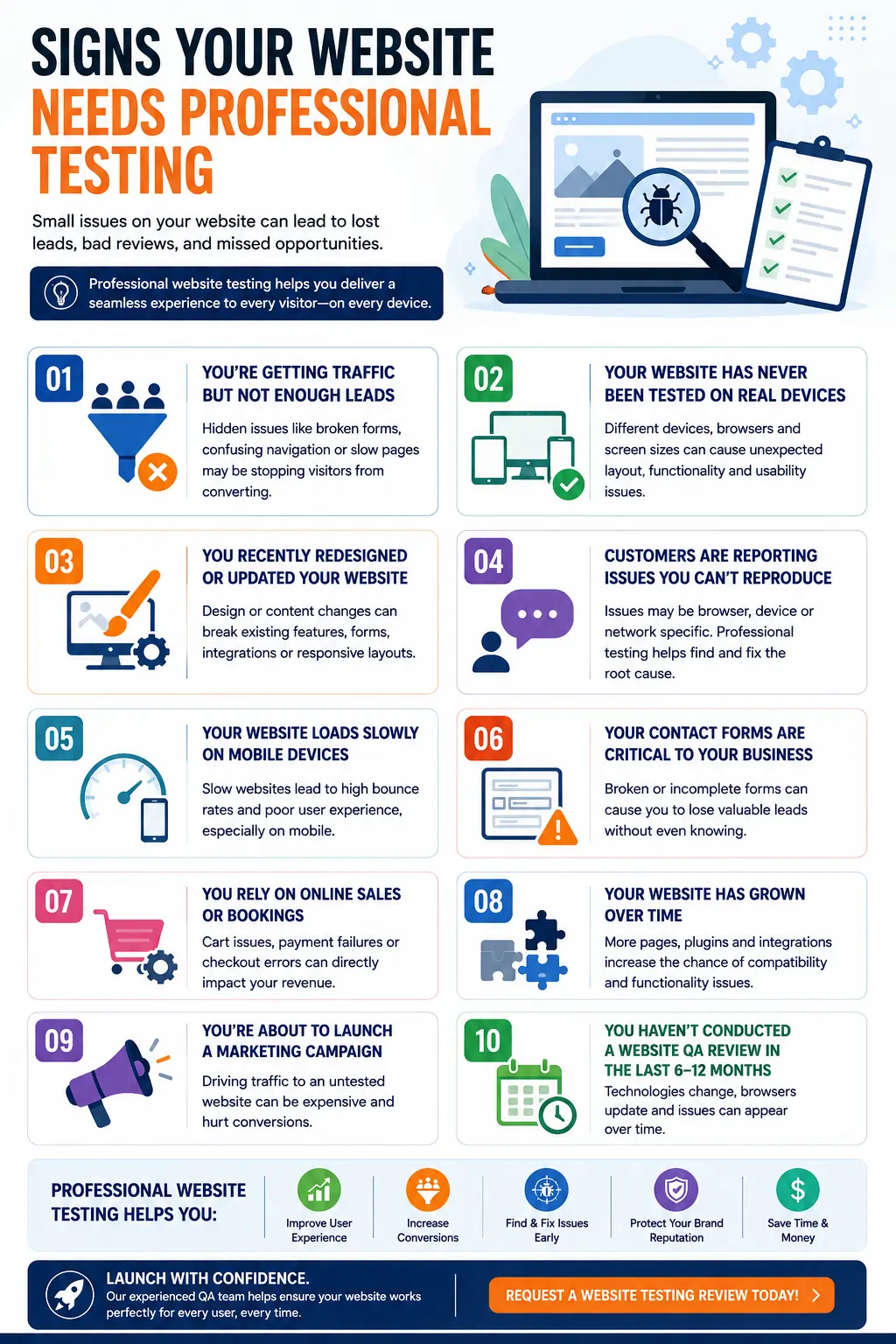
1. You're Getting Traffic but Not Enough Leads
One of the biggest warning signs is when your website receives visitors but generates fewer enquiries than expected.
Many business owners immediately blame marketing, SEO, or advertising campaigns. However, during website QA projects, we frequently discover issues such as:
- Forms not submitting correctly
- Poor mobile user experience
- Broken user journeys
- Confusing navigation
- Slow-loading pages
A website can attract traffic successfully while still creating friction that prevents visitors from converting.
Professional website testing services help identify these hidden obstacles before they impact business growth. We have seen websites with thousands of monthly visitors where simple usability problems were stopping potential customers from reaching out.
Struggling to turn website visitors into leads?
If your website is receiving traffic but enquiries remain low, there may be hidden usability or functionality issues affecting conversions.
2. Your Website Has Never Been Tested on Real Devices
Many websites are reviewed only on the developer’s laptop or a few internal devices.
Unfortunately, real users access websites using different devices, browsers, and operating systems, including:
- Different smartphones
- Tablets
- Desktop resolutions
- Operating systems
- Browsers
We have seen websites that looked perfect on desktop but displayed major usability issues on certain mobile devices.
Common examples include hidden buttons, broken menus, overlapping text, unresponsive forms, and layout issues.
Professional website testers validate functionality across multiple devices to ensure a consistent experience for every visitor.
This approach is similar to the real-device testing methodology used in our Mobile App Testing Services, where issues often appear only on specific devices and operating systems.
3. You Recently Redesigned or Updated Your Website
Website redesigns often introduce unexpected problems. Even small updates can affect forms, navigation, checkout processes, integrations, and responsive layouts.
Many businesses assume everything works because the visual design appears correct. However, website QA services often uncover issues that were not visible during development.
If you have recently launched a redesign, migrated platforms, added new features, or updated plugins, professional testing should be part of the release process.
We have worked with businesses that discovered critical issues only after customers started reporting them following a redesign.
4. Customers Are Reporting Issues You Can't Reproduce
Have you ever received messages like these?
- The form is not working.
- I cannot complete checkout.
- The page does not load properly.
Yet when your team checks, everything seems fine. This situation is extremely common.
User-reported issues often depend on browser versions, device types, network conditions, screen sizes, and user behavior.
Professional website testing helps reproduce these issues under real-world conditions and identify the root cause quickly.
5. Your Website Loads Slowly on Mobile Devices
Mobile traffic now accounts for the majority of website visits in many industries. Yet many websites are still optimized primarily for desktop experiences.
Signs of mobile performance problems include high bounce rates, low engagement, abandoned forms, and poor conversion rates.
Professional website testing services evaluate mobile responsiveness, performance, user journeys, and device compatibility. As a result, visitors can stay engaged regardless of the device they use.
Is your website losing mobile visitors?
Many businesses discover mobile-specific issues only after customers report them. Our QA specialists perform responsive testing and real-device testing to ensure websites work correctly across modern smartphones and tablets.
6. Your Contact Forms Are Critical to Your Business
For service-based businesses, contact forms are often the primary source of leads.
We have encountered situations where confirmation messages never appeared, form submissions failed silently, attachments were not delivered, or validation errors prevented completion.
The website appeared functional, but enquiries were being lost without anyone realizing it.
In one project, a client believed lead generation had declined due to market conditions. After testing, we discovered that form submissions were failing on certain mobile browsers.
If lead generation depends on forms, professional testing is a worthwhile investment.
7. You Rely on Online Sales or Bookings
For ecommerce stores and booking platforms, even minor issues can directly affect revenue.
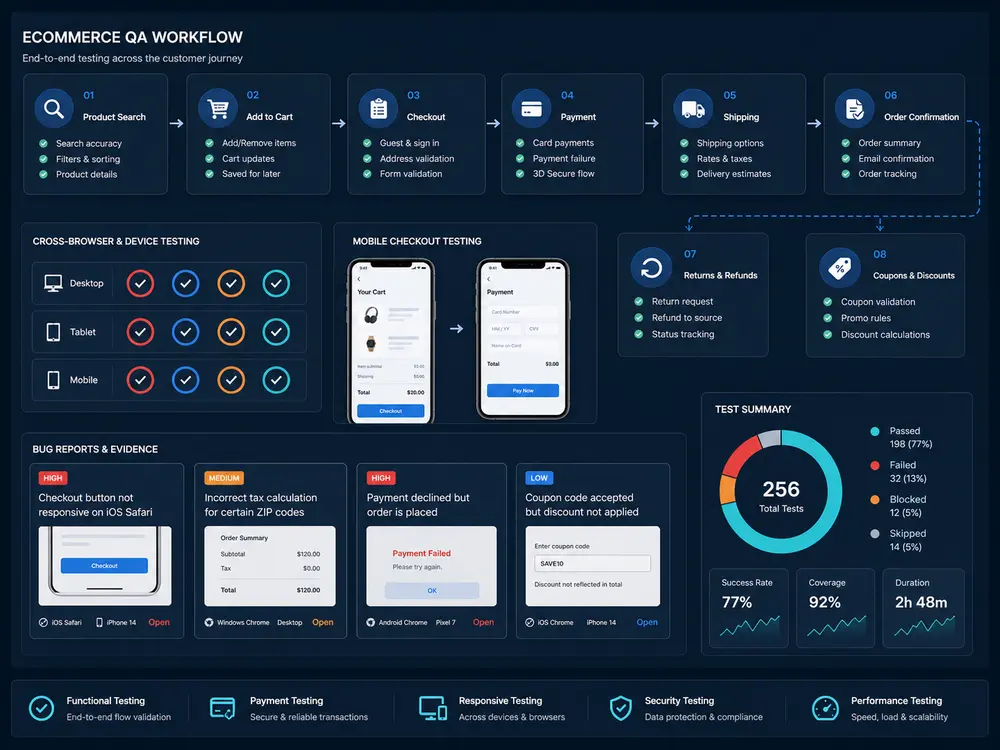
Common problems include cart issues, payment failures, broken discount codes, checkout errors, and session timeouts.
Professional website QA services focus on identifying these revenue-impacting issues before customers encounter them.
Many businesses combine website testing with Manual Testing Services to validate critical customer journeys and ensure transactions work smoothly.
8. Your Website Has Grown Over Time
Many websites evolve gradually. New pages, plugins, integrations, third-party tools, and marketing scripts are added over months or years.
As complexity increases, so does the likelihood of compatibility issues, broken functionality, performance degradation, and user experience inconsistencies.
Professional testing helps ensure all components continue working together correctly. What worked perfectly a year ago may no longer function as expected after dozens of updates and integrations.
9. You're About to Launch a Marketing Campaign
Businesses often spend significant budgets on Google Ads, social media advertising, SEO campaigns, and email marketing.
Driving traffic to an untested website can be expensive. Before investing in promotion, website testing services help verify landing pages, forms, conversion funnels, mobile experience, and performance.
This reduces the risk of losing potential customers due to preventable website issues.
Planning a website launch or marketing campaign?
Do not spend money driving traffic to a website that has not been fully tested. Our QA experts validate landing pages, forms, user journeys, browser compatibility, and responsiveness before your campaign goes live.
10. You Have Not Conducted a Website QA Review in the Last 6–12 Months
Websites are never truly finished. Browsers update, devices change, user expectations evolve, and third-party integrations receive updates.
A website that worked perfectly a year ago may now contain hidden issues that affect user experience and business performance.
Regular website QA reviews help identify problems before they become costly. Many businesses wait until customers complain before investigating website issues. By then, valuable leads and sales may already have been lost.
What Professional Website Testing Typically Covers
A comprehensive website testing service generally includes:
- Functional testing
- Cross-browser testing
- Mobile responsiveness testing
- Real-device testing
- Form validation testing
- User journey testing
- Compatibility testing
- Performance testing
- Usability testing
For larger business applications and complex platforms, organizations often extend these efforts through broader Software Testing Services to improve release quality and reliability.
The goal is not simply to find bugs. It is to ensure every visitor can successfully complete their intended actions on your website.
If you are comparing scopes or budgets, you can also review our Website Testing Packages and Software Testing Cost guide.
Ready to Find Hidden Website Issues Before Your Customers Do?
Whether you are preparing for a launch, redesign, SEO campaign, or simply want to improve website performance, our experienced QA team can help uncover issues affecting usability, conversions, and customer experience.
Why Choose Testers HUB?
- Real-device testing
- Cross-browser testing
- Responsive testing
- Functional QA testing
- Detailed bug reports with screenshots
- Experienced manual testers
- Fast turnaround times
Request a Website Testing Review Today and discover how your website performs from a real user perspective.
Contact Testers HUB to discuss your website testing requirements.
Frequently Asked Questions
What are website testing services?
Website testing services involve evaluating a website functionality, usability, responsiveness, compatibility, and performance to identify issues before they affect real users.
When should a website be professionally tested?
A website should be tested before launch, after redesigns, major updates, migrations, feature releases, or marketing campaigns.
Why is internal testing not enough?
Internal teams often test under ideal conditions and on limited devices. Professional website testers evaluate websites across multiple browsers, devices, operating systems, and real-world scenarios to uncover issues that internal teams may miss.
How often should a website be tested?
Most businesses should conduct website testing at least every 6–12 months, along with additional testing before major releases.
What types of issues can website testing identify?
Professional website testing can uncover broken forms, responsive design issues, browser compatibility problems, navigation errors, performance bottlenecks, checkout issues, user experience problems, and functional defects.
Can website testing help improve lead generation?
Yes. Many businesses discover that broken forms, poor mobile usability, confusing navigation, or user journey issues are reducing conversions. Website testing helps identify and resolve these problems.
What is the difference between website testing and a website audit?
A website audit often focuses on SEO, security, or performance metrics. Website testing evaluates the actual user experience, functionality, compatibility, responsiveness, and business-critical workflows.
Should startups invest in website testing services?
Yes. Startups have limited opportunities to make a strong first impression. Professional website testing helps identify issues before launch and reduces the risk of losing customers due to preventable problems.
Is website testing important for SEO?
Yes. Poor user experience, broken pages, mobile usability issues, and performance problems can negatively affect engagement metrics and overall website performance. Regular testing helps maintain a healthy website experience for users and search engines.
Final Thoughts
Many website issues remain unnoticed because they do not affect every user. Unfortunately, those hidden issues can still impact leads, sales, customer satisfaction, and business reputation.
If you are experiencing declining conversions, customer complaints, mobile usability concerns, or simply have not reviewed your website recently, it may be time to invest in professional website testing services.
At Testers HUB, we help businesses identify real-world website issues through comprehensive QA testing across devices, browsers, and user journeys, helping ensure websites perform reliably when it matters most.