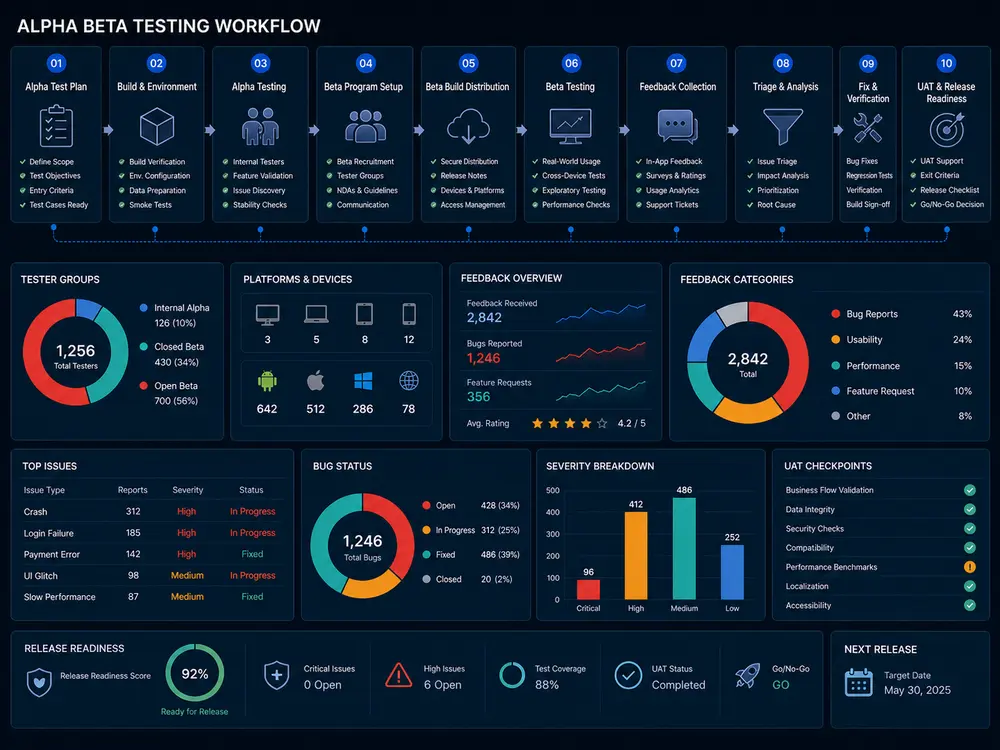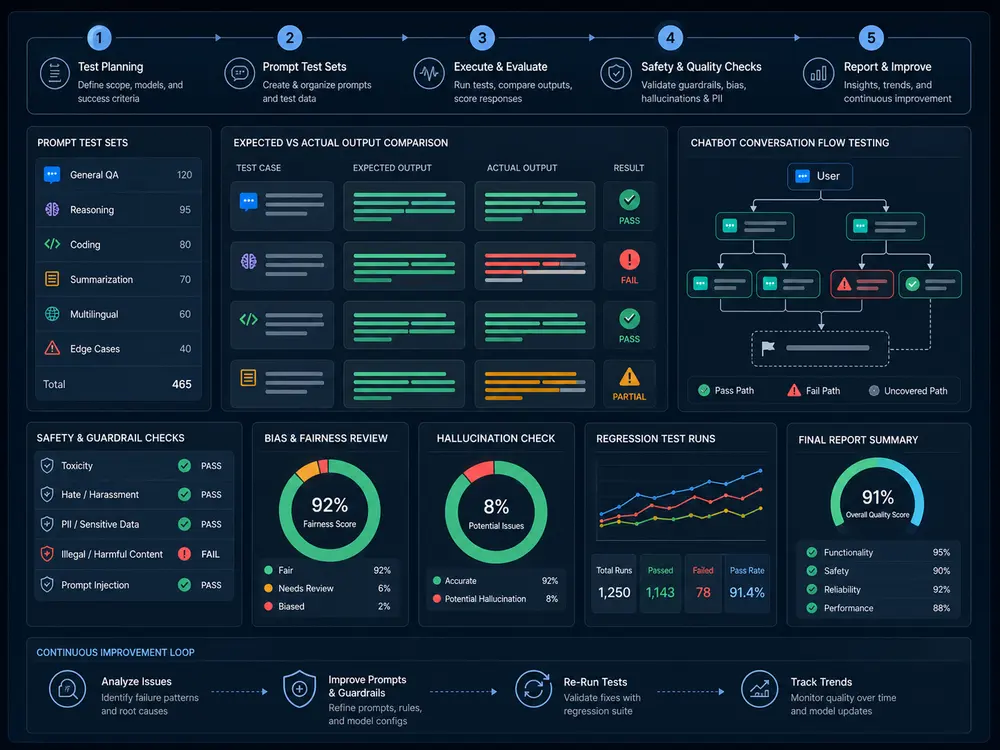
August 2, 2026 marks 14 years since Testers HUB was founded. It is a meaningful milestone for our team, but it is also a chance to pause and look honestly at the journey behind it.
We did not begin with a plan to become the largest testing company. We began with a simpler purpose: help product teams understand what could go wrong before their users had to discover it.
That purpose still guides us. The products have changed, release cycles have become faster, and artificial intelligence is reshaping how software is built. However, reliable QA still depends on curiosity, context, evidence, and the willingness to ask difficult questions before launch.
Fourteen years as Testers HUB. More than 15 years of software testing experience. One continuing commitment: give product teams honest, practical information they can use to make better release decisions.
How the Testers HUB Journey Began
Testers HUB started with the belief that independent QA should be easy to coordinate and closely connected to product risk. Early projects were hands-on. We learned the product, followed complete user journeys, reported what we found, and stayed involved while teams fixed and retested issues.
That work taught us an enduring lesson: a defect report is only useful when a developer can reproduce the problem and a product owner can understand why it matters. Screenshots, recordings, environment details, severity, and clear steps became part of how we worked, not optional additions at the end.
As clients returned with new products and more complex releases, our coverage expanded. Website testing grew into web application and SaaS testing. Mobile projects required Android and iOS checks across real devices. Game testing demanded attention to progression, controls, compatibility, performance symptoms, multiplayer behaviour, and the small moments that shape player trust.
Independent, hands-on QA focused on real workflows, reproducible defects, and practical release decisions.
Coverage grew across websites, web apps, mobile products, games, SaaS platforms, and ecommerce journeys.
Real-device testing, exploratory thinking, regression cycles, clearer evidence, and flexible QA teams became central.
AI now accelerates structured preparation while experienced testers remain responsible for coverage and judgement.
What Changed as Products and Teams Grew
Over time, we began supporting startups, agencies, SaaS companies, ecommerce teams, game studios, and established product businesses across the USA, UK, UAE, India, Australia, and other markets. Geography mattered less than product context. A release for an early MVP required a different QA plan from an established platform with active customers and weekly deployments.
We also saw why fixed testing checklists are not enough. Two products may use the same technology and still carry very different risks. A subscription SaaS platform may depend on roles, plans, billing, integrations, and tenant isolation. A mobile app may depend on permissions, interruptions, notifications, device constraints, and store readiness. A game may look stable in a development setup but behave differently on mid-range hardware or after a network change.
Consequently, our work shifted from checking isolated screens to understanding complete journeys. We became more deliberate about exploratory testing, real-device coverage, business-critical edge cases, retesting, and communication between QA, development, and product teams.
What Fourteen Years Have Taught Us About Quality
1. Users do not experience features in isolation
A sign-in screen can pass while the complete onboarding journey still fails. A checkout button can work while a discount, payment retry, or confirmation flow loses the sale. Testing must follow the path a real person takes, including interruptions, mistakes, and changes of mind.
2. Independent QA exposes assumptions
Developers know how a product is intended to work. Product owners know the business rules. Independent testers bring a different viewpoint. They ask what happens when a user skips a step, denies a permission, changes a plan, returns after several days, or uses a device nobody on the development team owns.
3. Evidence matters as much as discovery
Finding a problem is only half the job. A useful report explains the environment, preconditions, steps, expected result, actual result, severity, and supporting evidence. Clear reporting shortens the distance between discovery and a verified fix.
4. Speed needs prioritization
Faster releases do not always require more testing. They require the right testing. A focused risk-based scope can protect critical workflows, high-value customers, and release blockers before lower-impact coverage is expanded.
5. Human judgement remains the centre of QA
Tools can execute checks and AI can prepare drafts, but product quality is not a simple pass-or-fail calculation. Someone still needs to understand the customer, recognize ambiguity, challenge incomplete requirements, interpret evidence, and decide which risk deserves attention first.
A Snapshot of Our Recent Work
Our published 2025 testing review recorded more than 30 mobile applications and 50 websites and web applications tested during the year. It also documented more than 20,000 test cases designed and executed and more than 3,000 defects reported across multiple domains.
Those figures are not the story by themselves. Behind them were crashes that only appeared on specific devices, role and permission gaps in business applications, checkout and form failures, lost game progress, unclear user journeys, integration problems, and regression risks found before they reached more customers.
Our software testing case studies now share more of that practical experience while protecting confidential client information. We want potential clients to see not only what we test, but also how our team thinks and what useful QA evidence looks like.
Fourteen-year milestone
Thank you to the people behind the journey
Every client who trusted us with a release, every tester who kept investigating, and every developer or product owner who acted on difficult feedback helped shape Testers HUB. We are grateful for the long projects, the urgent launches, the lessons from mistakes, and the relationships that continued beyond a single test cycle.
Our Vision for QA in the AI Era
Artificial intelligence is changing how teams design, build, and release software. It is also changing software testing. We see genuine value in AI, but we do not believe quality improves simply by generating more test cases or automating every available step.
Our direction is human-led and AI-assisted. Testers HUB AI is being developed as a complete AI-driven test management environment that supports the testing service, not as a generic prompt tool.
AI can analyze a live website or web application and supporting material such as a PRD, BRD, Figma design, or workflow documentation. It can then accelerate the first structured test-case draft, assist with defect reporting, and help prepare test summaries. Our current service can provide a QA-reviewed first test-case draft within 24 hours when the product scope and access are suitable.
That promise is deliberately specific: test cases in 24 hours, not complete testing in 24 hours. Execution time still depends on product size, platforms, environments, devices, integrations, fixes, and retesting needs.
Experienced testers remain responsible for validating product context, improving coverage, adding exploratory scenarios, executing tests, reviewing evidence, setting severity, retesting fixes, and communicating release risk. Clients, developers, and product stakeholders can follow project progress inside the shared workflow. Automation-assisted regression support is part of the roadmap, but we will introduce it only where it creates reliable, maintainable value.
AI-assisted QA with human accountability
See how Testers HUB AI supports a managed testing project
Share a website, web app, PRD, BRD, Figma file, or supporting requirement. We will review the scope and explain how AI-assisted test design and experienced QA execution can shorten the preparation cycle.
How We Plan to Grow From Here
Our next chapter is not about replacing the services that built Testers HUB. It is about making those services more useful, more transparent, and easier to scale.
- Deeper platform expertise: continue strengthening mobile app testing services, website and web app testing, game testing services, SaaS QA, and ecommerce testing around real product risks.
- Flexible access to experienced QA: support one release, one sprint, pre-launch coverage, regression cycles, and dedicated testing teams without forcing every client into the same engagement model.
- Better AI-assisted workflows: expand Testers HUB AI across test planning, execution visibility, defect intelligence, summaries, traceability, and carefully selected automation support.
- More evidence-led knowledge sharing: publish honest case studies, cost guides, testing checklists, and lessons that help founders and product teams make informed QA decisions.
- Responsible global growth: serve more product teams across priority markets while preserving direct communication, clear ownership, and consistent delivery standards.
Growth matters, but the way we grow matters more. We want clients to know who is responsible for their project, what has been tested, what remains uncertain, and what evidence supports the release recommendation.
The Commitment We Carry Into Year Fifteen
Technology will continue to change. New devices, frameworks, AI-generated applications, and faster release models will create new types of risk. Our methods will evolve with them.
Our core commitment will not change: honest feedback over comfortable answers, user-first investigation over checklist completion, clear evidence over vague status updates, and long-term product quality over a quick pass.
To our clients, partners, team members, and everyone who has followed our work: thank you for being part of the first 14 years of Testers HUB. We are proud of what has been built, clear-eyed about what we can improve, and excited about the work ahead.
Planning a release or a new QA cycle?
Share your product, platforms, key workflows, release stage, and timeline. Our team will recommend a practical testing scope and explain the clearest next step.
Frequently Asked Questions
How long has Testers HUB been providing software testing services?
Testers HUB completed 14 years as a company on August 2, 2026. The 15+ years of experience mentioned elsewhere on the website includes software testing experience that began before the company was founded.
Which software testing services does Testers HUB provide today?
Testers HUB supports mobile app testing, website and web application testing, game testing, SaaS and ecommerce QA, manual and regression testing, automation support, real-device coverage, dedicated QA teams, and testing for AI-enabled products.
How is Testers HUB using AI in software testing?
Testers HUB uses AI to accelerate structured work such as application analysis, initial test case generation, defect assistance, and test summaries. Experienced QA professionals review coverage, execute tests, validate evidence, retest fixes, and remain accountable for release recommendations.
Will AI replace Testers HUB software testers?
No. The purpose of AI assistance is to reduce repetitive preparation and documentation, not remove human judgement. Product context, exploratory testing, usability, risk prioritization, and release decisions still require experienced QA professionals.
How can a product team start working with Testers HUB?
Share the product type, target platforms, important user journeys, current release stage, and timeline through the Testers HUB contact page. The team will review the requirement and recommend a practical QA scope, engagement model, and next step.