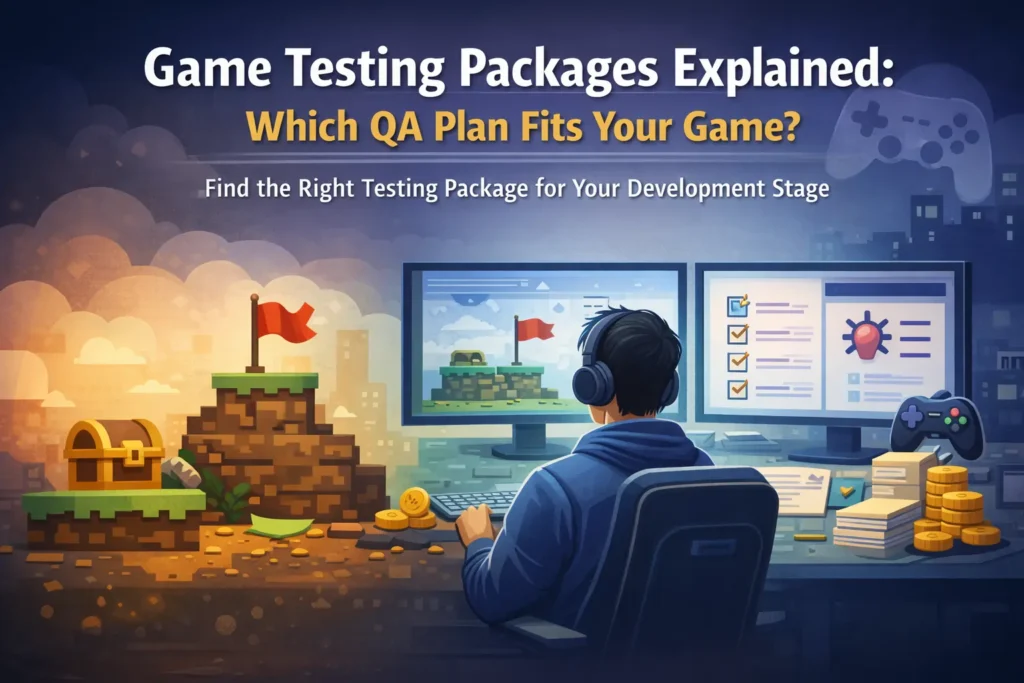
Developing a game involves more than building engaging mechanics and attractive visuals. Before launching a game to players, developers must ensure that gameplay works smoothly across different devices, operating systems, and real-world usage scenarios. This is where game testing services become essential.
However, many developers, especially indie studios, often struggle to decide what type of testing support they need. Some games require only a quick validation before soft launch, while others need deeper gameplay testing and multiple QA cycles before global release. As a result, many studios choose structured game testing packages that align with their development stage.
In this guide, we’ll explain how game testing packages work and how to choose the right QA plan for your game.
Why Game Testing Packages Matter for Developers
Game testing is a critical step in ensuring that your game performs reliably for players. Bugs in gameplay mechanics, device compatibility issues, or broken progression systems can quickly lead to negative player feedback.
Structured game QA packages help developers catch these issues early by providing dedicated testing cycles, device coverage, and detailed defect reports.
Instead of hiring testers individually or running informal testing rounds, many studios choose outsourced game QA services through predefined packages. This approach helps developers control testing costs while still receiving professional QA support.
Additionally, testing packages allow studios to scale QA efforts depending on their development stage.
Key Factors to Consider When Choosing a Game Testing Package
Choosing the right testing package depends on several factors.
Development Stage
Games in early development stages typically need basic gameplay validation. This type of testing focuses on core mechanics, UI behavior, and stability across devices.
Games approaching launch require more comprehensive testing, including regression cycles, progression validation, and compatibility testing.
Game Complexity
The complexity of your game also influences the type of testing required.
For example:
- Casual mobile games may need shorter QA cycles.
- Multiplayer games require deeper testing for synchronization and gameplay flow.
- Monetized games need additional validation for rewards, economy systems, and progression logic.
The more complex the gameplay systems are, the more structured testing cycles become necessary.
Platform Coverage
Games released across multiple platforms require broader testing coverage.
Mobile games, for example, must be tested across different screen sizes, devacross devicessystem versions. Compatibility testing ensures that players experience the game consistently regardless of their device.
Because of this, many developers choose mobile game testing packages that include testing across several real devices.
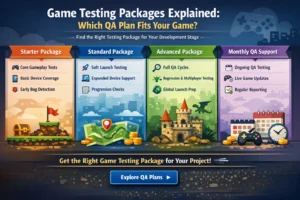
Common Types of Game Testing Packages
Most game testing providers offer packages designed to support different development stages.
Starter Testing Package
Starter testing plans are typically designed for early builds or MVP versions of a game.
These packages focus on:
- validating gameplay mechanics
- identifying obvious bugs
- testing basic compatibility across a small number of devices
Starter packages are often ideal for indie developers preparing for soft launch.
Standard Testing Package
Standard packages are designed for games preparing for broader release.
They usually include:
- multiple test cycles
- gameplay progression validation
- expanded device coverage
This level of testing helps ensure that core game systems work reliably before launch.
Advanced Testing Package
Advanced testing packages are used for feature-rich games approaching global release.
These plans often include:
- deeper gameplay testing
- edge-case scenario validation
- regression testing
- structured test case documentation
Advanced packages provide developers with a more comprehensive understanding of game stability and performance.
Monthly QA Support
Some studios require ongoing testing support rather than one-time testing cycles.
Monthly QA packages are designed for:
- live games with regular updates
- seasonal events
- frequent feature releases
With continuous QA support, developers can ensure that new updates do not introduce new bugs or gameplay issues.
How Game Testing Packages Help Reduce Development Risks
Investing in professional game testing services before launch can prevent costly issues after release.
When games launch with bugs, players often leave negative reviews or abandon the game entirely. Fixing issues after launch can also require emergency updates that disrupt development schedules.
By running structured QA cycles before release, developers can:
- detect gameplay bugs early
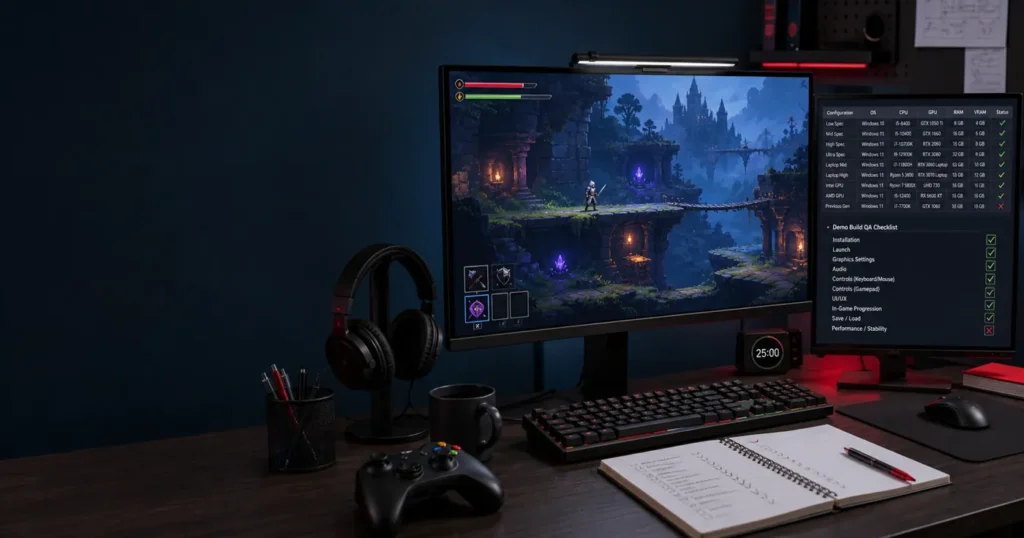
- validate compatibility across devices
- improve player experience
- avoid post-launch patching costs
Ultimately, structured testing packages help studios release more stable and polished games.
Choosing the Right Game Testing Partner
Selecting the right QA partner is just as important as choosing the right testing package.
A reliable game testing company should provide:
- real-device testing coverage
- experienced QA testers
- structured defect reports
- flexible testing cycles
Studios should also look for providers that understand gameplay mechanics and real player behavior, rather than focusing only on technical checks.
Explore Professional Game Testing Packages
Choosing the right testing plan depends on your development stage, game complexity, and release timeline.
At Testers HUB, we provide flexible game testing packages designed for indie developers, mobile game studios, and teams preparing for launch. Our QA specialists test gameplay mechanics, device compatibility, and progression systems to ensure your game performs smoothly before release.
Explore our Game Testing Packages and find the right QA plan for your project
Frequently Asked Questions
What are game testing packages?
Game testing packages are structured QA plans that include testing cycles, device coverage, and defect reporting to help developers validate gameplay before release.
Do indie developers need game testing services?
Yes. Even small games can face compatibility issues or gameplay bugs, which professional QA testing helps detect early.
How many devices should a mobile game be tested on?
Most testing cycles involve multiple real devices to ensure compatibility across screen sizes and operating system versions.