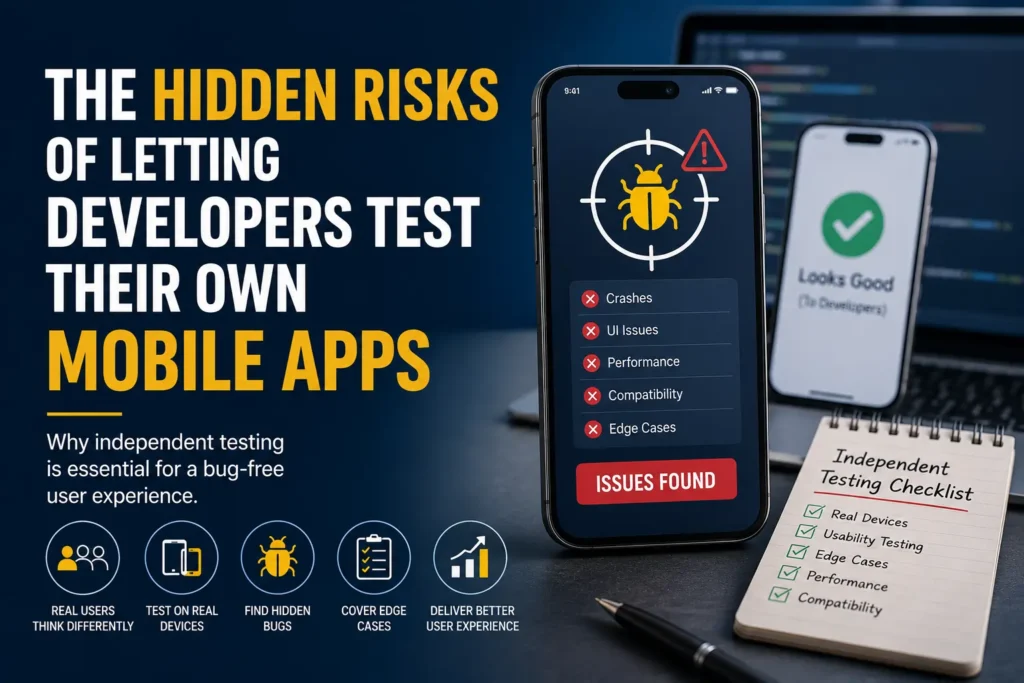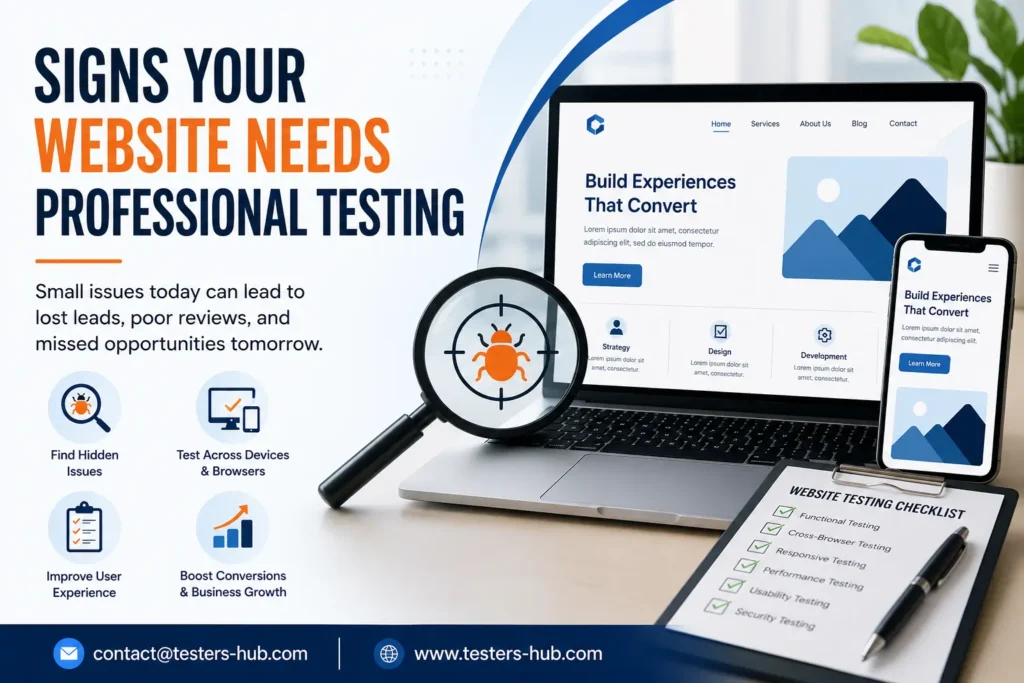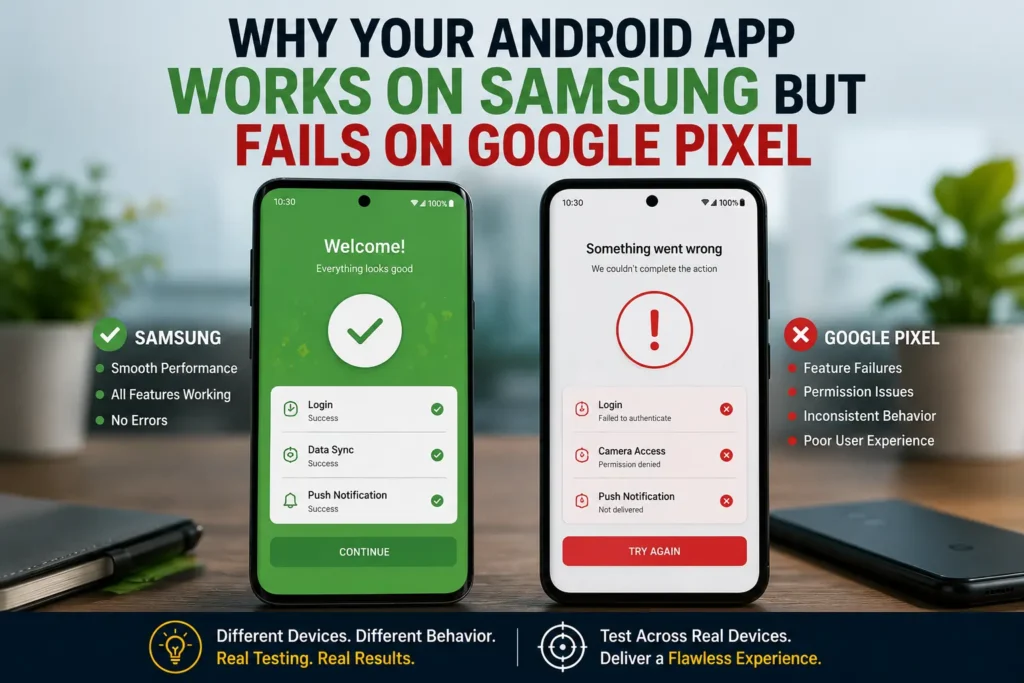
Compare QA pricing, calculate an estimated budget, or review the related package before requesting a quote.
Software testing cost & pricing
Use cost calculator
View website testing packages
Website testing cost is often misunderstood. Many businesses assume it’s just about finding bugs; however, the actual cost depends on multiple factors such as testing type, tools, devices, and QA effort. Therefore, instead of focusing only on pricing, it’s important to understand what actually influences the cost of website testing services and how to estimate it effectively.
👉 Instead of guessing, you can use our software testing cost calculator to get an instant estimate based on your project requirements.
What Are Website Testing Services and Why Are They Important?
Website testing services involve evaluating a website’s functionality, usability, security, and performance before release. As a result, businesses can identify issues early and avoid costly failures after launch.
Moreover, professional QA helps ensure:
- Smooth functionality across features
- Better user experience and navigation
- Faster load times and stability
- Strong security and data protection
Because of this, investing in proper testing reduces long-term maintenance costs and improves customer satisfaction.
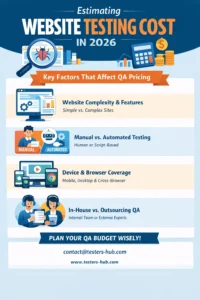
What Actually Affects Website Testing Cost?
Website testing cost varies because every project has different requirements. Therefore, understanding the key factors helps you plan your QA budget more accurately.
1. Website Complexity and Features
First of all, complexity plays a major role. A simple static website requires minimal testing, whereas a SaaS platform or marketplace needs extensive validation.
For example:
- Simple websites → basic functional checks
- Medium websites → forms, logins, workflows
- Complex platforms → dashboards, APIs, real-time data
Naturally, higher complexity increases testing effort and cost.
2. Type of Testing Required
Secondly, the type of testing significantly impacts cost.
- Functional testing ensures features work correctly
- Performance testing evaluates speed and stability
- Security testing protects against vulnerabilities
- Compatibility testing checks multiple devices and browsers
- Usability testing improves user experience
Since each type requires different tools and expertise, the overall QA cost increases accordingly.
3. Device and Browser Coverage
In addition, testing across multiple devices and browsers increases effort.
For instance:
- Desktop browsers (Chrome, Safari, Edge)
- Mobile devices (iOS and Android)
- Different screen sizes and OS versions
Therefore, broader coverage results in higher testing investment but ensures better real-world performance.
4. Manual vs Automated Testing
Another important factor is the testing approach.
Manual testing is ideal for usability and exploratory scenarios; however, it takes more time.
Automated testing, on the other hand, speeds up repetitive tasks but requires initial setup.
In most cases, a combination of both provides the best balance between quality and cost.
5. In-House vs Outsourced QA
Finally, businesses must decide how they want to manage testing.
- In-house QA offers control but involves higher costs (salaries, tools, devices)
- Outsourced QA services provide flexibility, expertise, and cost efficiency
Because of this, many companies prefer outsourcing to experienced QA providers.
👉 Since all these factors vary for every project, you can use our QA cost calculator to estimate your testing budget more accurately.
How to Estimate Website Testing Cost Effectively
Instead of relying on rough assumptions, businesses should evaluate cost based on real project needs.
Consider:
- Website size and feature set
- Required testing types
- Devices and browsers coverage
- Frequency of updates or releases
👉 To simplify this process, try our software testing cost calculator and get a quick estimate tailored to your requirements.
Looking for Actual Pricing Ranges?
If you want to understand real pricing ranges based on project size and testing scope, check our detailed guide on:
👉 Website Testing Services Cost in 2026: What Businesses Really Pay
(This will help you compare realistic budgets and service levels.)
How to Reduce Website Testing Cost Without Compromising Quality
Although testing is essential, there are ways to optimize cost efficiently.
- Start testing early to avoid expensive fixes later
- Focus on high-risk areas first
- Use a mix of manual and automation testing
- Choose the right QA partner for your needs
As a result, you can maintain quality while keeping costs under control.
Final Thoughts
Website testing cost is not fixed — it depends on multiple factors such as complexity, testing type, and coverage. Therefore, instead of focusing only on price, businesses should focus on value and risk reduction.
👉 Try our testing cost calculator to estimate your QA budget and plan your testing strategy with confidence.
At Testers HUB, we help businesses deliver high-quality websites through structured and reliable testing services tailored to their needs.
Frequently Asked Questions
What factors affect website testing cost?
Website testing cost depends on complexity, testing type, device coverage, and testing approach.
Is manual testing more expensive than automation?
Manual testing requires ongoing effort, whereas automation reduces long-term cost but needs initial setup.
How can I estimate my testing budget?
👉 You can use our
software testing cost calculator to get an accurate estimate based on your project.
Is outsourcing QA more cost-effective?
Yes, outsourcing provides access to skilled testers and tools without long-term overhead costs.
How can I reduce testing cost?
You can optimize cost by starting early, focusing on critical areas, and using a balanced testing approach.