Test shopping paths
First, we map product discovery, cart, checkout, payment, and order workflows for your store.

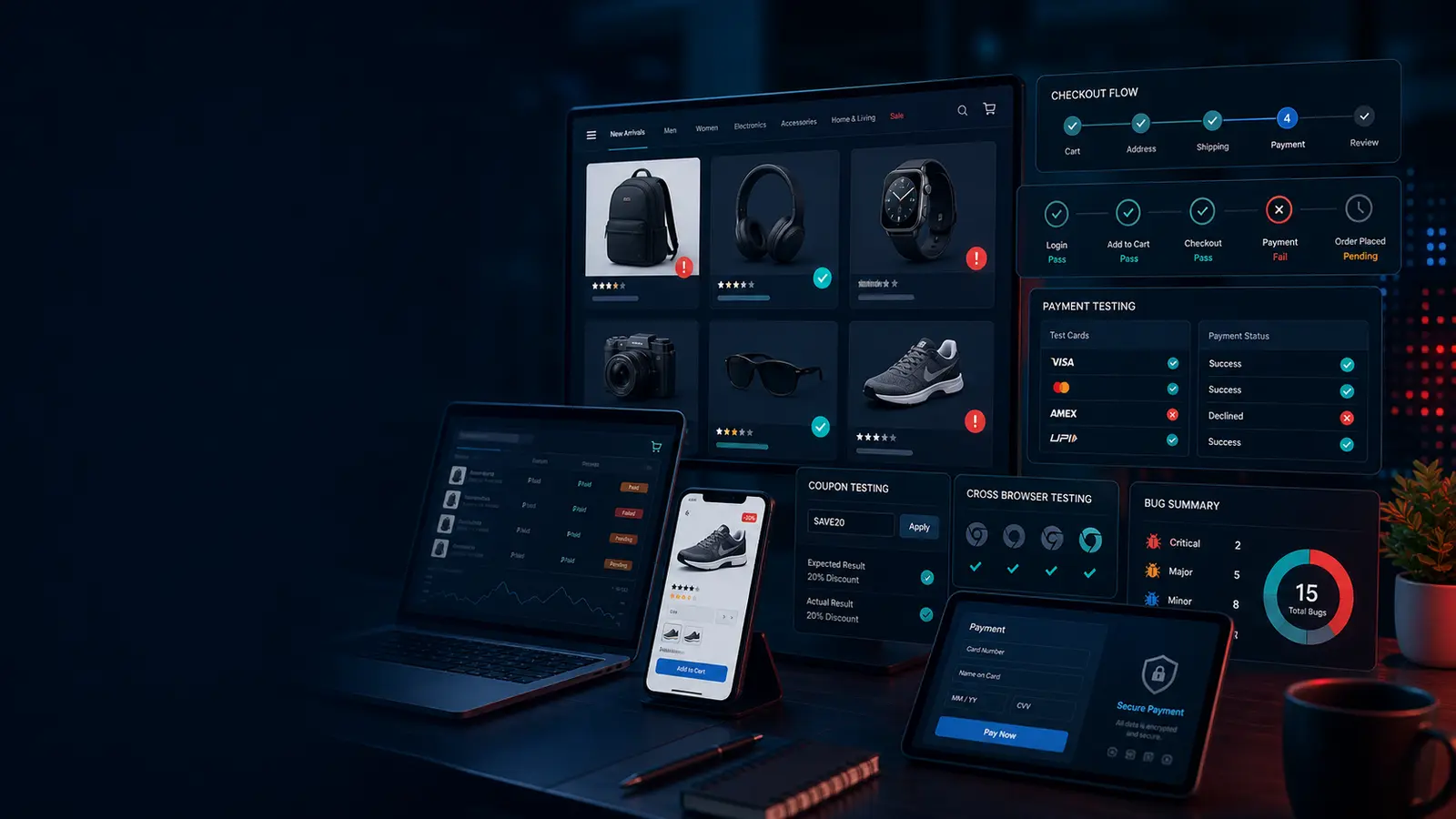
eCommerce testing services for online stores, marketplaces, mobile shopping, checkout, payment, and order flows
Testers HUB helps ecommerce teams catch defects before they affect sales. Our ecommerce website testing services cover product discovery, cart behavior, checkout, coupons, payments, shipping, order confirmation, responsive layouts, integrations, and regression testing.
What we test
Small store defects can become expensive when customers are ready to buy. Therefore, our ecommerce testing services focus on transaction paths, device behavior, integrations, and release changes that can block orders.
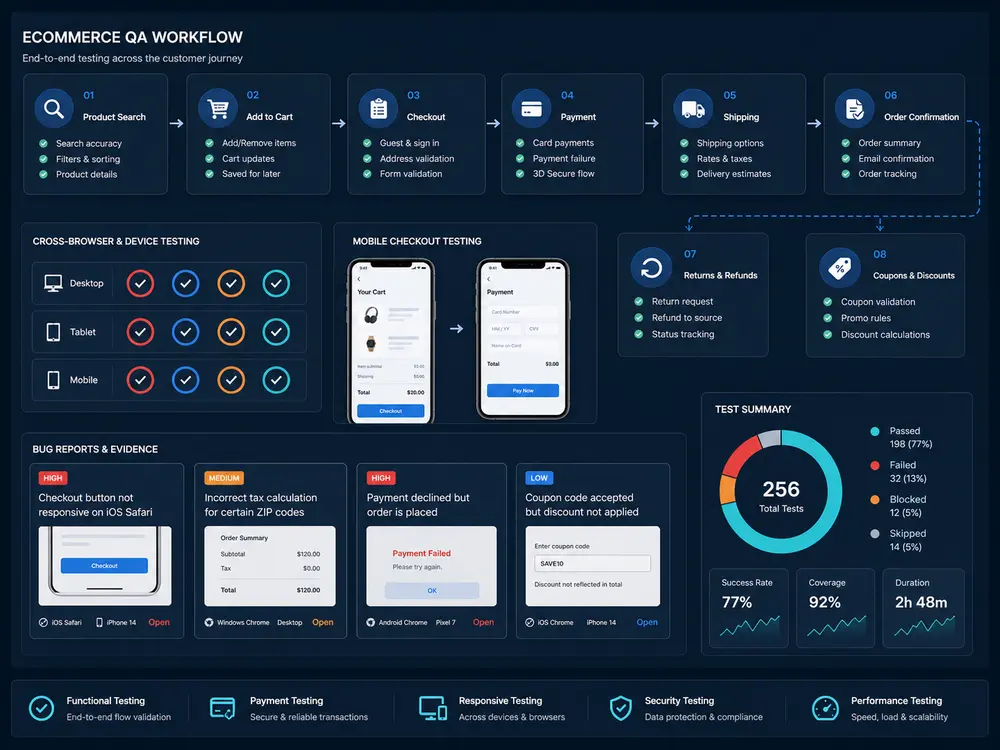
First, we map product discovery, cart, checkout, payment, and order workflows for your store.
Next, we test mobile views, browser behavior, discounts, stock states, shipping rules, and integration points.
Finally, defects include steps, screenshots, device details, severity, and retest notes for faster decisions.
Validate cart, checkout steps, address fields, taxes, shipping, discounts, payment redirects, and confirmation pages.
Check successful payments, failed payments, retries, redirects, stored methods, refunds, and order status behavior.
Review search, filters, sorting, product details, variations, inventory, pricing, wishlists, and recommendations.
Validate responsive layouts, tap targets, sticky bars, images, forms, and mobile checkout behavior.
Check shipping, tax, CRM, ERP, email, analytics, payment, and third-party app behavior where scope allows.
Retest high-value flows after theme updates, plugin changes, platform releases, promotions, or code deployments.
Platforms and tools
We adapt the test plan around the store architecture, customer geography, payment model, and campaign calendar. As a result, testing can include Shopify, WooCommerce, Magento-style workflows, custom ecommerce apps, marketplace features, BrowserStack, payment sandbox data, analytics checks, and real-device validation.
Completed US fashion eCommerce engagement
A US fashion brand asked Testers HUB to validate its store before a major collection launch. Testing found product-size mismatches in cart and checkout, mobile Safari overlap that obstructed checkout controls, and coupons that worked on product pages but failed at final payment. Read the full US fashion eCommerce case study.
A selected Medium size could appear as Large in the cart or checkout, creating incorrect-order risk.
Promotional banners overlapped important checkout elements on smaller screens, mainly in mobile Safari.
Some discount codes applied on product pages but failed during the final payment steps.
After fixes, regression testing validated stability and the collection launched without major customer-facing issues.
Original QA evidence
This compact, sanitized matrix shows how a completed engagement connected buyer actions to expected behavior, actual results, release risk, supporting evidence, and retesting. Client data, order data, and private recordings are not published.
| Product / Variant | Device | Browser | Cart State | Coupon | Shipping | Payment State | Order Confirmation | Expected | Actual | Severity | Evidence | Retest |
|---|---|---|---|---|---|---|---|---|---|---|---|---|
| Fashion item / Medium | Priority devices | Agreed matrix | Item added | Not applied | Available | Checkout entry | Not reached | Medium remains Medium | Large could appear | Incorrect-order risk | Case study | Regression completed |
| Launch collection | Small mobile screen | Mobile Safari | Ready for checkout | As configured | Available | Checkout controls | Not reached | Controls remain usable | Banner overlapped controls | Purchase-path risk | Case study | Regression completed |
| Eligible product | Mobile and desktop | Agreed matrix | Eligible cart | Applied earlier | Available | Final payment step | Not reached | Coupon remains valid | Coupon failed at payment | Checkout abandonment risk | Case study | Regression completed |
Choose the right QA window
Choose the engagement around the release risk and deadline rather than adding unnecessary testing cycles.
Validate priority catalog, cart, checkout, payment, mobile, browser, shipping, integration, and order flows before release.
Focus on promotions, coupons, inventory states, mobile shopping, checkout, payment, and fix verification before traffic increases.
Retest revenue-critical flows after theme, app, platform, integration, campaign, or code changes.
Optional Shopify coverage
When accessibility is part of the confirmed scope, Testers HUB can combine automated checks with human-led keyboard, zoom, responsive, workflow, and agreed screen-reader testing across representative product, cart, account, and checkout-entry journeys. This is technical QA against agreed WCAG criteria, not legal advice or formal certification.
Related QA coverage
Keep broad website QA, native shopping apps, recurring releases, cost evaluation, and client evidence on their dedicated owner pages.
FAQ
Scope checkout, payment, mobile, campaign, and retesting coverage around the buyer journeys that matter most.
Yes. When a sandbox or approved test payment method is available, we can validate successes, failures, retries, redirects, refunds, and order-status behavior without live customer charges.
Yes. Mobile ecommerce QA can cover product variants, cart behavior, checkout forms, coupons, payment redirects, responsive layouts, and order confirmation across agreed devices and browsers.
Yes. Focused coverage can prioritize products, promotions, coupons, cart, checkout, payments, shipping, mobile shopping, and fix verification before traffic increases.
Yes. Retesting confirms whether reported cart, checkout, payment, responsive, integration, and accessibility issues were resolved and records any remaining release risk.