Game studios rarely need the same QA capacity throughout development. A small internal team may handle daily build checks well, then struggle when alpha content connects, beta coverage expands, or a release candidate needs broader platform and regression testing. That is usually when outsourcing becomes useful: not as a replacement for product knowledge, but as a flexible extension of the studio.
After more than 15 years in software testing, we have seen the best results when developers retain ownership of design intent while an independent team examines the build through unfamiliar player journeys. This guide explains why studios outsource game QA testing, where it adds value, and how to choose support without losing control of the release.
For a direct overview of gameplay, device, performance, multiplayer, monetization, and release coverage, review our game testing services.
1. Reduce Fixed QA Overhead
An internal QA department requires recruitment, onboarding, devices, workstations, test accounts, tools, management time, and enough work to keep the team consistently productive. That investment can be worthwhile for a large studio with continuous releases. However, it is harder to justify when testing demand rises sharply before milestones and then falls again.
Outsourced QA converts part of that fixed commitment into project-based capacity. A studio can start with one focused cycle, expand coverage for beta, and reduce the team after launch. The comparison should include more than hourly rates. It should also account for device access, management effort, reporting quality, retesting, and the cost of building specialist knowledge internally.
2. Add an Independent Player Perspective
Developers know how a feature was designed and which path is expected. That knowledge helps them diagnose defects, but it can also create familiarity bias. Players skip tutorials, revisit old saves, switch networks, deny permissions, change controllers, leave sessions idle, and combine systems in ways the development team may not anticipate.
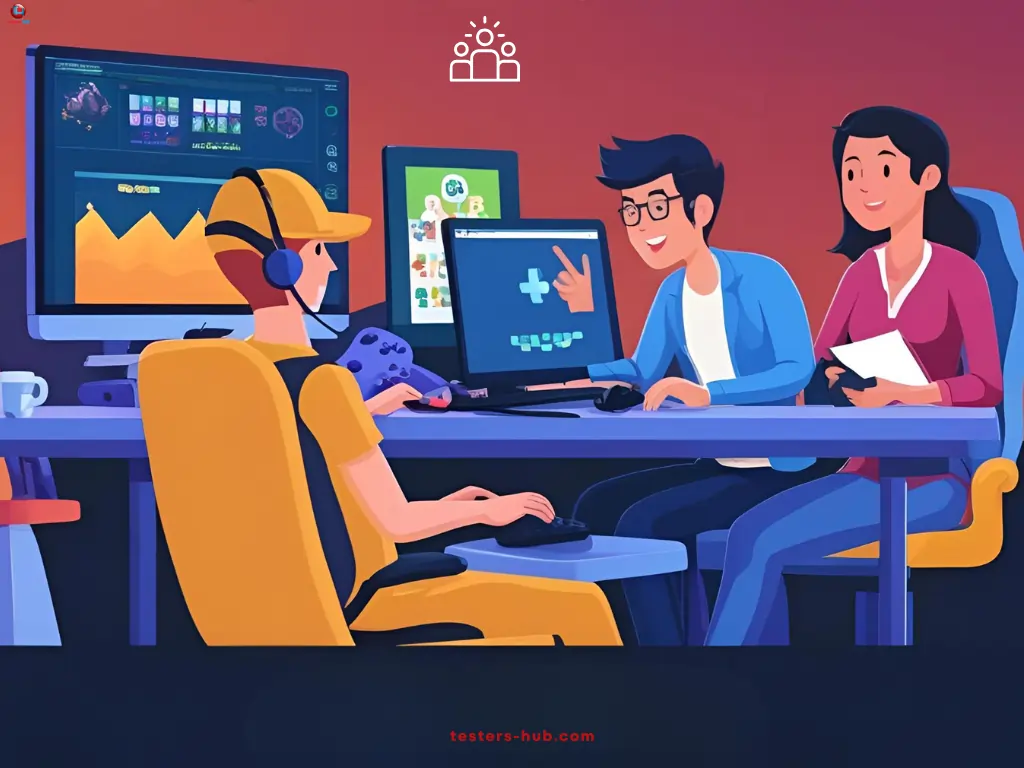
An external game QA team approaches the build without those assumptions. The goal is not random clicking. Testers follow realistic journeys, record the exact state that produced a problem, and compare the observed result with the intended experience. This independent perspective is especially valuable for onboarding, progression, controls, monetization, recovery flows, and long sessions.
3. Scale Coverage Around Development Milestones
QA needs change as the game matures. During a prototype, the studio may only need a short review of controls and the core loop. Alpha requires connected-system testing. Beta introduces longer journeys, broader devices, and usability feedback. A release candidate needs focused regression and evidence for launch decisions.
Outsourcing allows the team size and scope to follow those milestones. Studios can use a small independent review early, increase coverage during beta and release, then retain a lighter regression cycle for updates. Our guide on when an indie studio should bring in external QA explains this milestone-based approach in more detail.
4. Expand Device and Platform Coverage
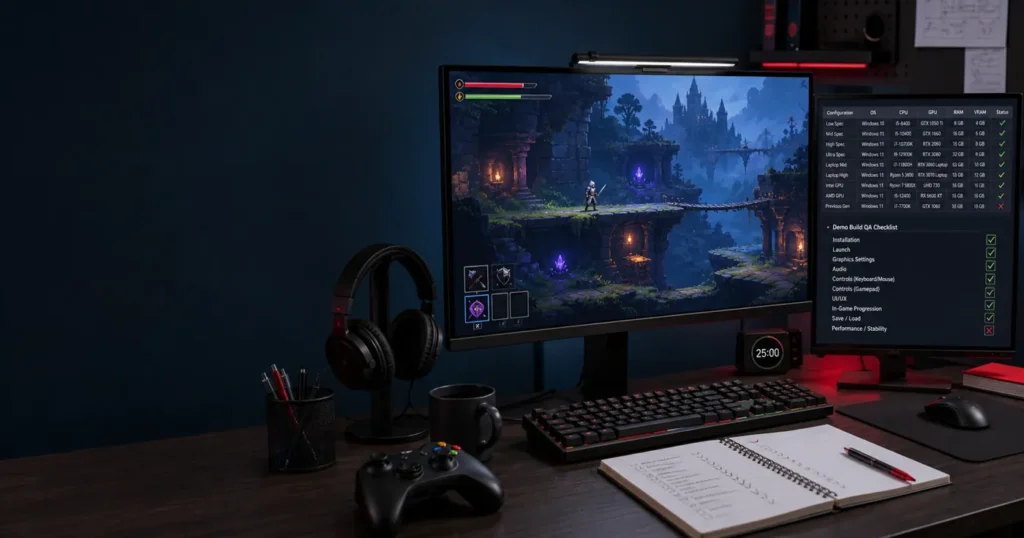
A game that performs well on development hardware can behave differently across Android phones, iPhones, tablets, PCs, controllers, screen resolutions, graphics settings, operating-system versions, and network conditions. Maintaining every useful configuration internally is expensive, particularly for smaller studios.
An external partner can provide a planned device or hardware matrix based on the target audience rather than testing an arbitrary collection of devices. For mobile titles, real-device mobile game testing can expose touch, layout, permission, thermal, memory, battery, and OS-specific issues that emulators or premium phones may not reveal.
5. Improve Defect Evidence and Retesting
A useful bug report should help a developer reproduce the problem without a long clarification thread. It normally includes the build, environment, starting state, steps, expected result, actual result, severity, frequency, screenshots or video, and logs when available.
Structured external QA creates a consistent reporting rhythm across testers and cycles. Once a fix arrives, the team can retest the original defect and check connected areas for regression. This matters because a technically correct fix can still affect saves, progression, rewards, UI states, multiplayer sessions, or performance elsewhere in the game.
6. Protect Developer Focus Near Release
Late in development, engineers and designers already have competing priorities: release blockers, optimization, platform requirements, content changes, analytics, store preparation, and production support. Asking the same people to repeatedly validate every fixed flow reduces the time available for diagnosis and implementation.
An external QA team can own build verification, focused regression, evidence collection, and retest status while developers concentrate on fixes. The studio still decides severity and release readiness. The advantage is a clearer division of responsibility, not less product ownership.
7. Access Specialized Game QA Skills
Different games create different risks. A casual mobile title may depend on ads, rewards, in-app purchases, notifications, and interrupted sessions. A multiplayer game adds lobbies, matchmaking, reconnects, synchronization, and latency symptoms. A PC build introduces hardware, graphics, input, and resolution combinations. Live games must protect progression while content and services change.
Studios can outsource targeted expertise instead of trying to build every specialty at once. The scope may include gameplay, compatibility, performance observations, multiplayer flows, localization checks, store readiness, accessibility, monetization, or long-session testing. Good partners also say clearly when a requested area needs a separate security, compliance, or specialist performance engagement.
8. Support Regression and Live Operations
Launch is not the end of QA. New levels, events, SDKs, engine updates, balance changes, server releases, hotfixes, and operating-system updates can disturb features that were previously stable. Liveops teams need a repeatable way to protect critical player journeys without retesting the entire game blindly.
An outsourced team can maintain regression coverage around login, onboarding, progression, purchases, rewards, saves, multiplayer, and other revenue or retention-sensitive flows. For frequent releases, a dedicated arrangement may be more practical than arranging a new one-off project for every update. Studios can compare that option on our Hire Game QA Testers page.
9. Internal QA vs. Outsourced Game QA
| Consideration | Internal QA | Outsourced QA |
|---|---|---|
| Product knowledge | Deep knowledge of design intent and development history | Independent perspective with fewer familiarity assumptions |
| Capacity | Stable but limited by permanent team size | Can expand or reduce around milestones |
| Devices and platforms | Depends on owned lab and hardware | Can add selected external coverage |
| Communication | Immediate access to the development team | Requires clear builds, scope, channels, and response expectations |
| Best use | Daily checks, design context, rapid feature feedback | Independent journeys, broader coverage, regression, release cycles |
Many studios get the strongest result from a hybrid model. Internal QA stays close to the product and changing features. External testers provide independent coverage, additional devices, repeatable evidence, and temporary scale when release risk increases.
10. How to Choose an External Game QA Partner
Before sharing a production build, ask how the team plans coverage, secures access, reports defects, communicates blockers, and handles retesting. A low quote is not useful if the scope excludes the target devices, critical gameplay areas, evidence, or a second cycle.
Questions worth asking
- Which game genres, platforms, engines, and release stages have you tested?
- How will you choose devices or hardware for this audience?
- What will each defect report contain?
- Are videos, screenshots, environment details, and retesting included?
- How do you handle unstable builds and blocked test areas?
- Can you work in our Jira, Linear, ClickUp, Trello, or other tracking workflow?
- What access controls and confidentiality practices will be used?
- How quickly can the team respond to release-blocking fixes?
A focused paid pilot is often the safest starting point. It lets both teams test communication, report quality, coverage, and turnaround before committing to a larger engagement.
Frequently Asked Questions
Why do studios outsource game QA testing?
Studios usually outsource to add independent player journeys, specialist skills, broader device coverage, structured reporting, or temporary capacity around beta, release, and major updates.
Does external QA replace an internal testing team?
Not necessarily. A hybrid model is common. Internal QA protects product knowledge and daily feedback, while external testers add independent coverage, devices, regression capacity, and release support.
When should a studio bring in external QA?
Light independent feedback can help once a playable build exists. Broader external coverage becomes more valuable during alpha integration, beta, release-candidate testing, store submission, and post-launch updates.
How much does outsourced game QA cost?
Cost depends on build maturity, platforms, devices, gameplay scope, multiplayer complexity, test cycles, evidence, and retesting. Published starting points are available on our game testing packages page.
What should be included in a game QA report?
Reports should include the build and environment, starting state, reproduction steps, expected and actual results, severity, frequency, visual evidence, and retest status. Logs should be included when they are available and useful.
Can an external team test live game updates?
Yes. External teams can maintain focused regression coverage for new content, events, SDK updates, hotfixes, server changes, and other liveops releases.