Before talking about vision or future plans, we believe progress should be measured with real numbers, not vague statements. For us, 2025 has been a year of hands-on execution, learning through complexity, and strengthening how we deliver quality.

📊 Our 2025 in Numbers
Over the course of the year, Testers HUB actively tested products across platforms, domains, and geographies:
- ✅ 30+ mobile applications tested (iOS & Android)
- ✅ 50+ websites and web applications tested
- ✅ Coverage across multiple domains, including:
- Consumer and lifestyle apps
- Business and enterprise applications
- Travel and booking platforms
- CRM and internal tools
- AI-powered applications
- eCommerce and marketplace platforms
- SaaS products
- Mobile and PC games
- EdTech platforms
In terms of QA output and execution:
- 🐞 3,000+ defects identified and reported
- 🧪 20,000+ test cases designed and executed
- 🔁 Multiple regression and retesting cycles across live releases
These numbers represent real user issues prevented before production, not theoretical testing coverage.
🌍 Working With Global Brands
In 2025, we also collaborated with growing and established global brands, including:
- Go Global Travel (Israel)
- Dream Game Studios – part of the Dream Sports ecosystem (Dream11, India)
Working with such teams pushed us to adapt to global QA expectations, fast release cycles, and higher accountability—raising our internal standards in the process.
A Year That Refined How We Think About Quality
While the numbers show scale, 2025 was more about maturity than volume.
Instead of only validating features, we focused on:
- Understanding real user behavior
- Identifying business-critical edge cases
- Improving QA–developer communication
- Delivering reports that drive faster fixes
This mindset helped us shift from “testing screens” to protecting product reliability and user trust.
How 2025 Shaped Testers HUB
Expanding Across Regions Without Compromising Quality
Throughout the year, we worked with clients from the US, UK, Australia, UAE, and India. However, geography was never the main challenge—context was.
Each market brings different user expectations, compliance needs, and release pressures. Because of this exposure, we learned how to adapt our testing approach while keeping quality consistent. As a result, we became more confident supporting distributed teams, async workflows, and rapid Agile releases.
Supporting a Wide Range of Product Types
During 2025, our QA team tested products at very different maturity levels—ranging from early MVPs to revenue-generating platforms.
Some products required deep functional validation, while others demanded strong focus on UX clarity, performance stability, and edge-case handling. Consequently, our testers learned to think in terms of end-to-end user journeys, not isolated features.
Real-Device Testing Became Non-Negotiable
One decision we reinforced strongly in 2025 was prioritizing real-device testing.
While simulators are useful, they often hide issues related to:
- Device-specific UI behavior
- OS-level permission handling
- Memory and performance constraints
- Background interruptions and network instability
By testing on real devices, we uncovered problems that would otherwise surface after launch. This approach helped clients reduce negative reviews, avoid last-minute delays, and improve release confidence.
Exploratory Testing Took Center Stage
Alongside structured test cases, we leaned heavily into exploratory testing.
This allowed testers to:
- Follow unexpected user paths
- Break assumptions in business logic
- Identify loopholes and misuse scenarios
- Detect UX friction that scripted tests often miss
Because of this, many high-impact issues were caught earlier in the development cycle, without extending timelines.
Clearer Processes and Actionable Reporting
Another major improvement in 2025 was refining how we deliver QA outcomes.
We focused on:
- Clear test scopes aligned with product stages
- Practical defect prioritization
- Precise reproduction steps
- Context-rich reports for developers and product owners
As a result, teams could fix issues faster, avoid miscommunication, and ship releases with greater control and predictability.
Building a Stronger QA Team Culture
Growth is not only about clients—it’s about people.
This year, we invested in:
- Mentoring junior testers
- Improving internal documentation
- Encouraging ownership over task-following
- Standardizing QA checklists and workflows
Because of this, we scaled our QA capacity while maintaining consistency, accountability, and quality discipline.
What We’re Building in the Coming Year
Smarter QA Engagement Models
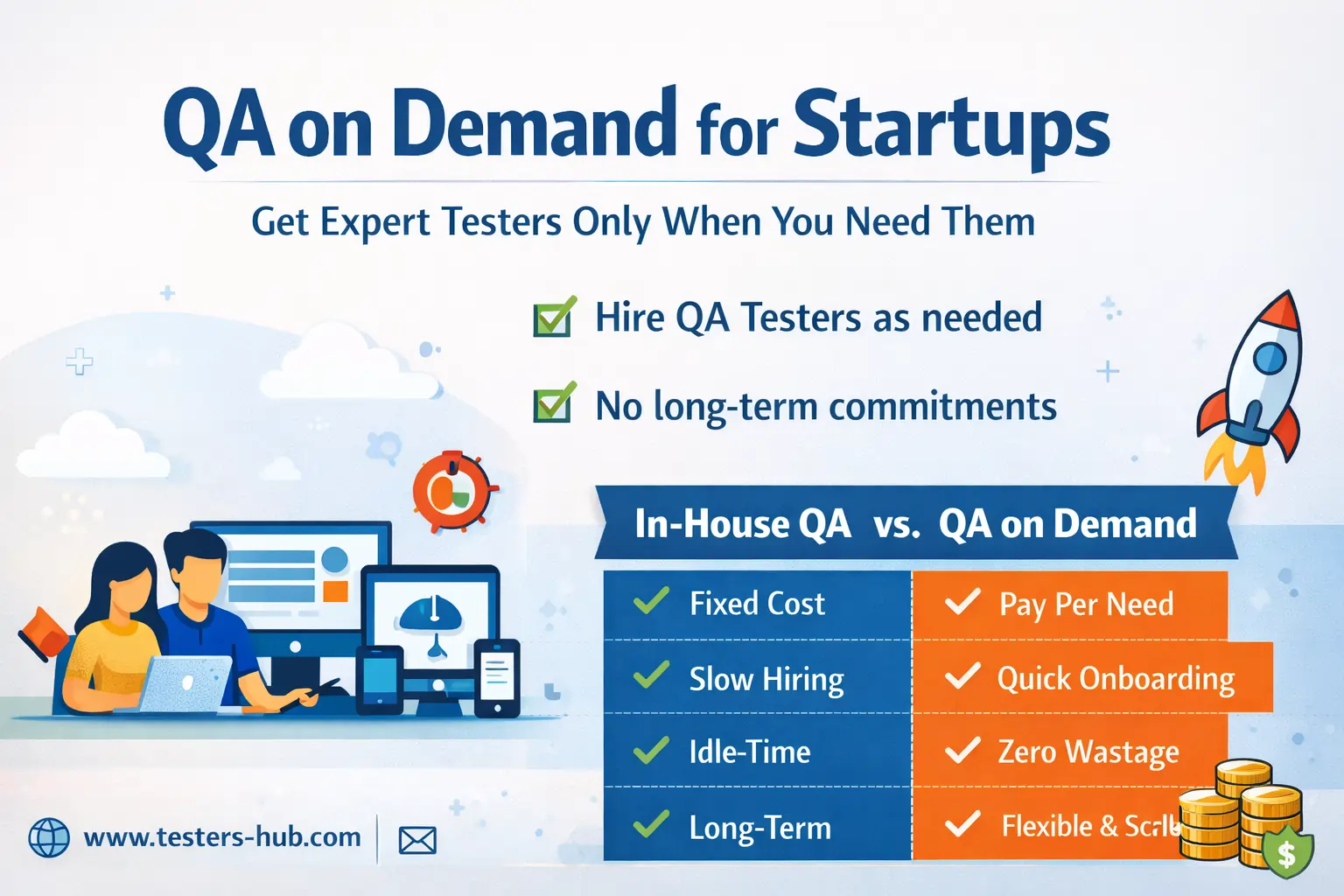
In the year ahead, we’re focusing on flexible engagement options such as:
- QA-on-demand support
- Dedicated tester models
- Startup-friendly testing plans
- Long-term QA partnerships
This approach allows teams to scale testing up or down without friction, especially during rapid development phases.
Practical Automation, Not Over-Automation
Automation matters—but only when applied correctly.
Going forward, we will:
- Automate stable, repetitive flows
- Avoid automating frequently changing features
- Support Playwright and Cypress-based setups
- Guide teams on automation ROI
Our focus remains value-driven automation, not automation volume.
Deeper Focus on Game Testing
With increasing demand from gaming studios, we’re strengthening our expertise in:
- Mobile and PC game testing
- Gameplay logic and progression
- Performance and stability validation
- Pre-launch and beta testing cycles
This ensures games feel polished, fair, and reliable from day one.
Knowledge Sharing as a Core Priority
Beyond services, we’ll continue investing in:
- Educational QA blogs and insights
- Real-world case studies
- Best practices for product teams
- Transparent discussions around quality challenges
We believe better products are built when knowledge is shared openly.
Our Commitment Going Forward
Regardless of scale or growth, our principles remain unchanged:
- Honest feedback over pleasing answers
- User-first testing mindset
- Clear communication
- Long-term thinking
For us, quality isn’t a phase—it’s a habit.
Frequently Asked Questions (FAQ)
What type of companies does Testers HUB work with?
We work with startups, agencies, and growing businesses. Our approach adapts based on product maturity, budget, and release goals.
Do you support testing after product launch?
Yes. We provide ongoing QA support, including regression testing, feature validation, and release-based testing cycles.
Is exploratory testing part of your QA approach?
Absolutely. Exploratory testing is one of our core strengths and helps uncover issues that scripted tests often miss.
Do you offer automation testing services?
Yes, selectively. We help teams decide what should be automated and what should remain manual to avoid unnecessary maintenance.
Which platforms do you specialize in?
We specialize in mobile apps, web & SaaS platforms, games, and eCommerce websites.
How can we start working with Testers HUB?
You can reach out for a free QA consultation, where we understand your product and recommend the right testing approach.
Let’s Build Quality That Lasts
If you’re planning to improve product quality in 2025 and beyond, Testers HUB is ready to support you.
👉 Reach out for a free QA consultation
👉 Let’s turn quality into a long-term competitive advantage