One problem many startup teams face is estimating the budget for quality assurance. Development tasks usually have clear timelines, but testing often feels unpredictable.
Because of this, founders frequently delay QA planning until late in the release cycle. By that stage, however, the team is already under pressure to launch quickly. As a result, testing becomes rushed and important issues may remain unnoticed.
In reality, estimating testing effort is not as complicated as it may seem. Even a basic estimate can help teams plan their release timeline more effectively.
A Simple Way Product Teams Estimate QA Effort
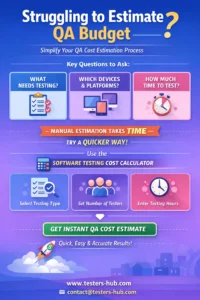
Instead of trying to calculate testing cost from the beginning, many teams start by looking at three simple questions.
What parts of the product need validation?
Every application contains workflows that users interact with daily. Login systems, dashboards, payments, and notifications usually require careful testing.
How many environments must be tested?
Some products operate in a single environment. Others must support multiple browsers, devices, or operating systems.
How much time is available for testing?
If the release timeline is short, teams may need several testers working simultaneously. However, if the timeline is flexible, testing can happen in smaller cycles.
Looking at these factors provides a practical way to estimate testing effort.
Why Mobile Applications Require More Testing
Mobile apps introduce additional challenges during testing. Users interact with apps on many device models and operating system versions. Therefore, compatibility testing becomes an important step.
For example, testers may need to verify:
- core application features
- screen layout behavior
- login or account flows
- integration with external services
Because mobile devices vary widely, testing across multiple environments is often necessary.
Website Platforms Also Need Careful Validation
Although websites run inside browsers, they still require structured testing before release. Small usability problems can significantly affect user experience.
Testing web platforms usually involves reviewing:
- navigation and page flow
- form submissions
- browser compatibility
- responsive layouts on different screen sizes
Even minor issues in these areas can affect how users interact with the platform.
Why Manual Estimation Takes Too Long
Product teams often attempt to estimate testing effort manually. This usually involves reviewing features, listing possible test scenarios, and approximating testing hours.
While this method can work, it often takes time. In fast-moving development environments, teams prefer quicker ways to understand their QA budget.
Because of this, estimation tools are becoming increasingly useful.
Try the Software Testing Cost Calculator
To make QA estimation easier, we built a Software Testing Cost Calculator that allows teams to calculate testing budgets within seconds.
Instead of guessing the cost, the calculator allows you to enter a few basic details about your project.
You simply choose:
- the testing service required
- the number of testers involved
- the estimated testing hours
After entering this information, the calculator generates an estimated QA cost for the project.
👉 Try the Software Testing Cost Calculator
This approach helps startups understand their potential testing budget before starting detailed QA discussions.
Planning QA Early Improves Product Quality
Testing should not be treated as the final step before launch. Instead, it works best when integrated into the development process from the beginning.
When teams estimate QA effort early, they can schedule testing cycles properly and avoid last-minute surprises.
Even a simple estimate helps founders understand how much validation their product may require.
If you want to estimate the testing effort for your application, try the Software Testing Cost Calculator and get an instant QA cost estimate.